Researchers
Work through synthesis routes with an assistant that shows the data behind each step.
Ask about reactions, mechanisms, calculations, instruments, and lab methods. Answers are checked against chemical databases and include confidence ratings—so you know how much to trust them. Built for chemists, researchers, students, educators, and lab professionals.
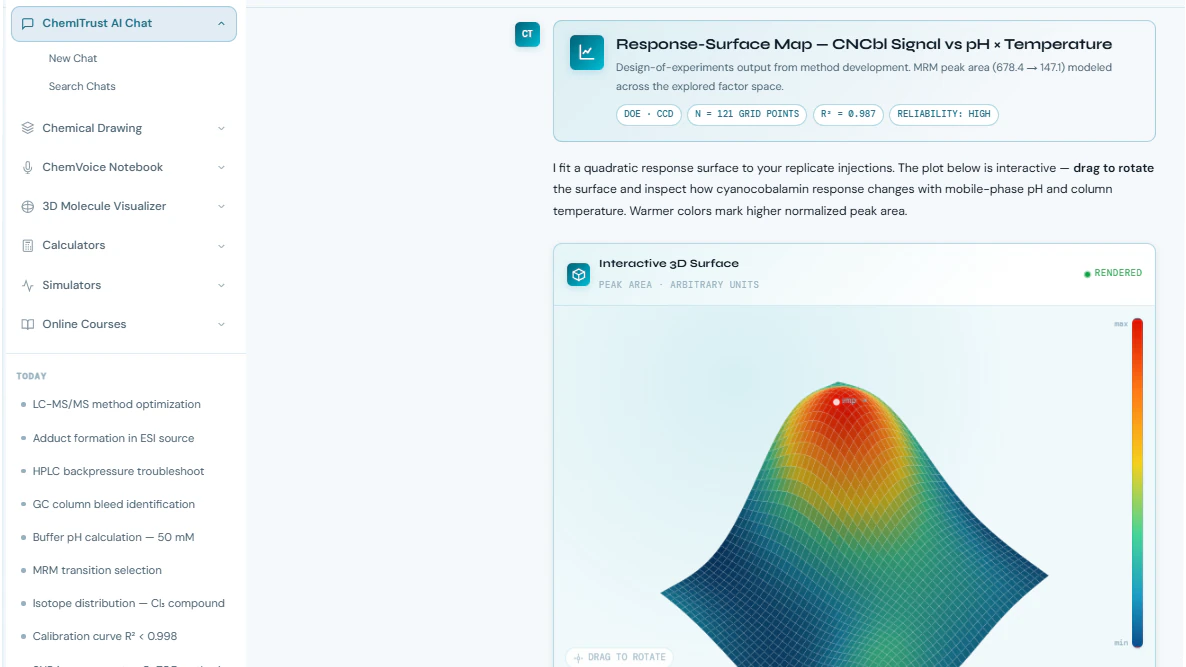
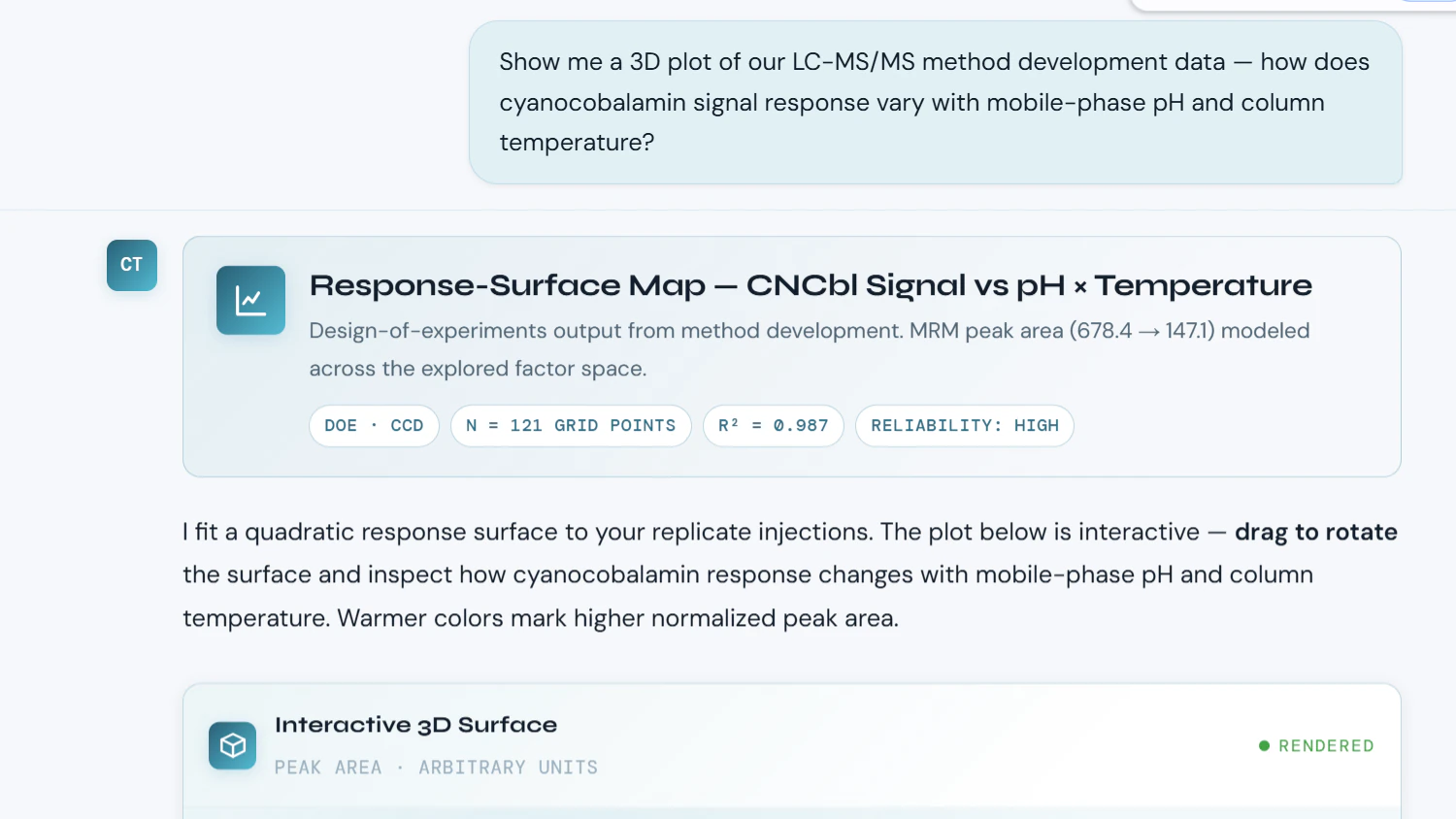
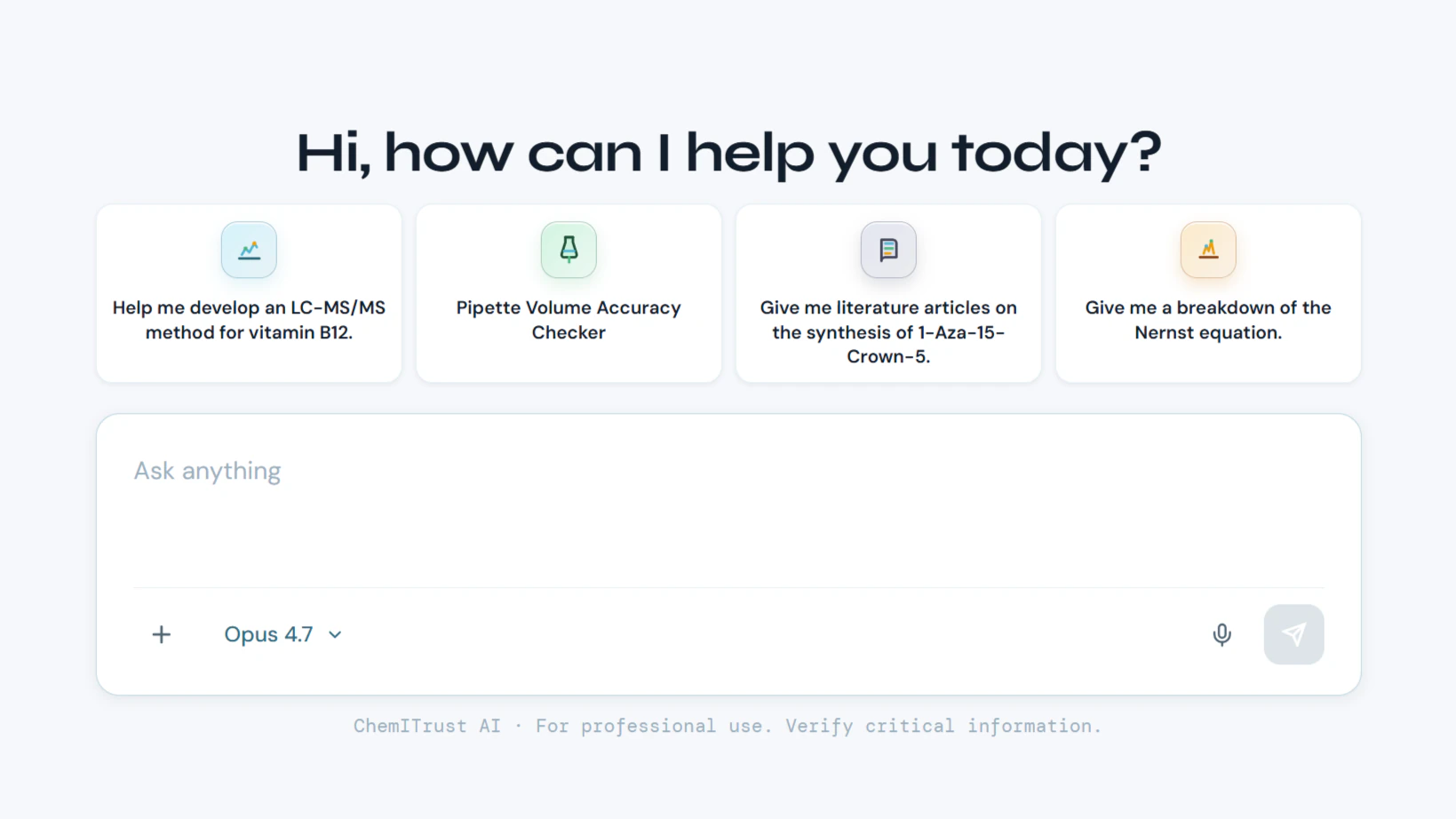
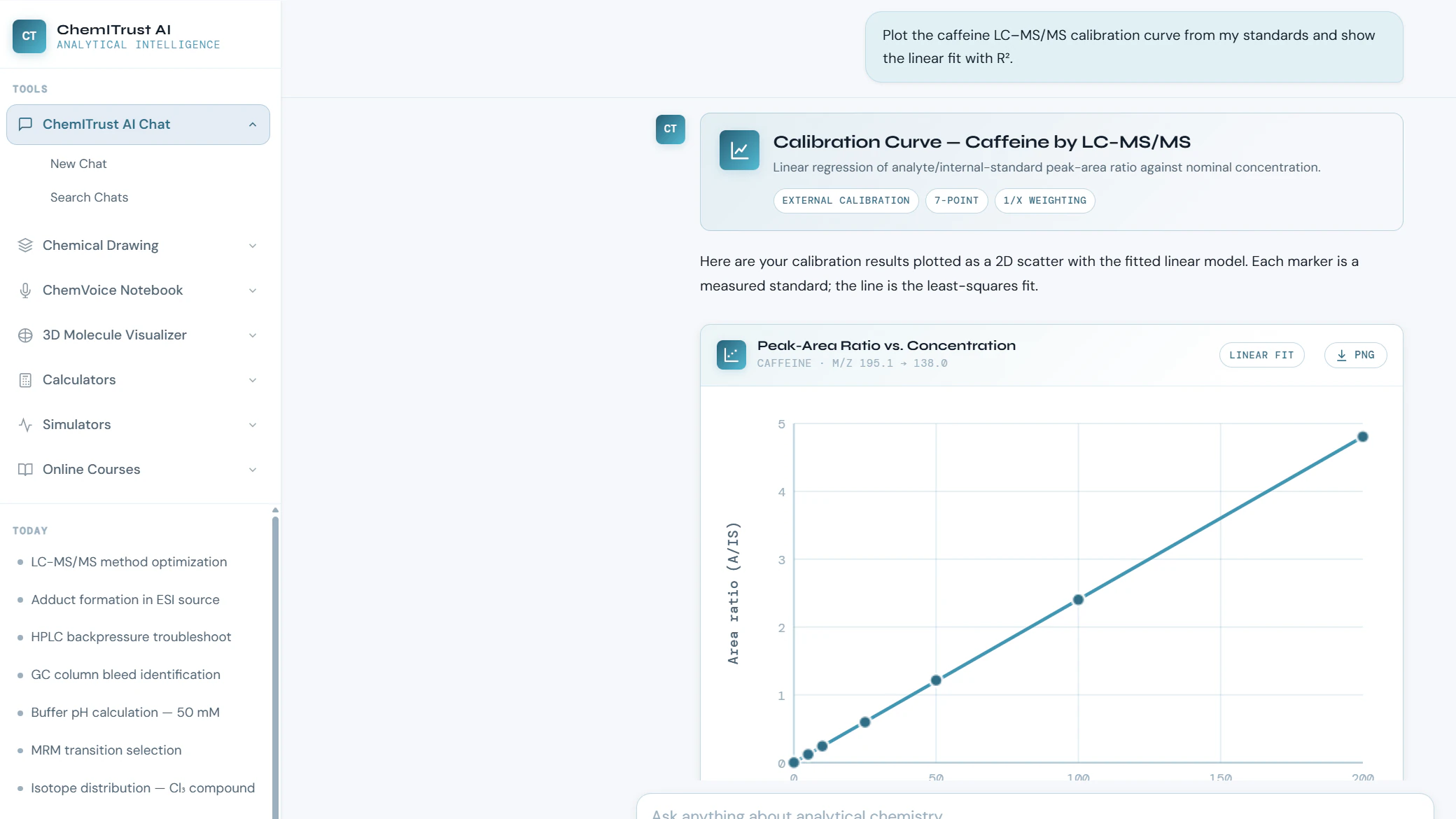
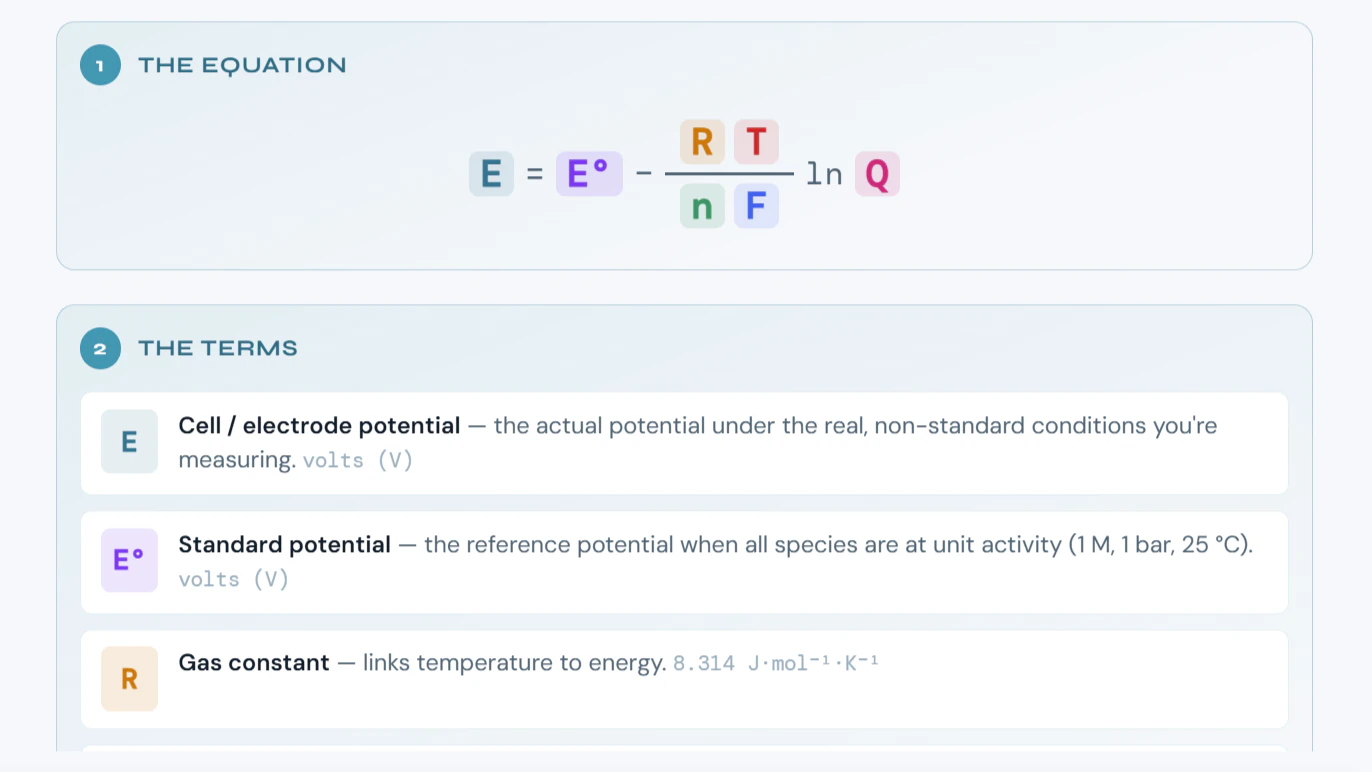
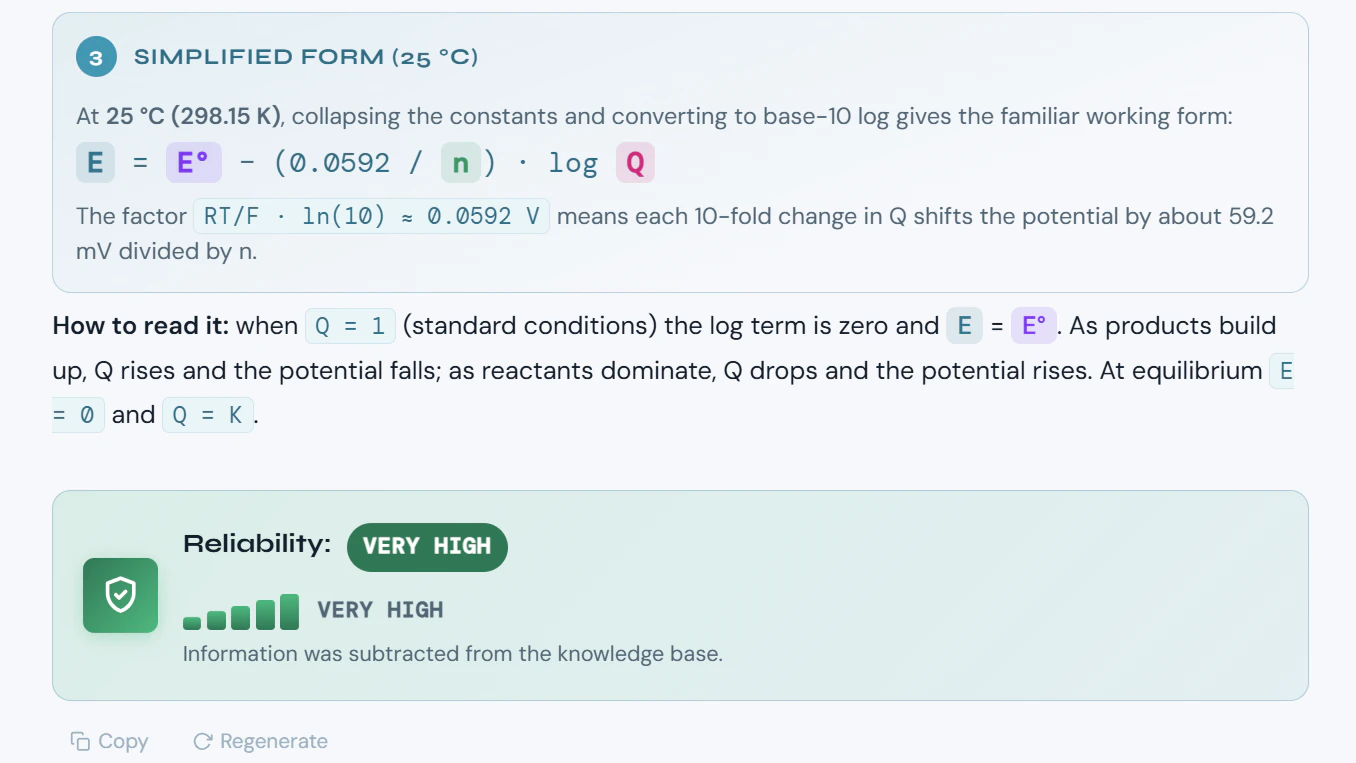
Ask real chemistry questions. Get answers you can check—with calculations, sources, and scientific tools built in.
Choose between ChatGPT, Claude and Gemini, with answers grounded in chemical databases and reviewed against the data retrieved. Rather than asking you to take an answer on faith, each researched answer arrives with a confidence rating you can weigh yourself.
Molecular data can be fabricated.
Weights, pKa values and reaction conditions may be invented.
Multi-step work can fail silently.
Stoichiometry and redox balancing may return wrong numbers with no warning.
No built-in lab tools.
You bounce between five separate tabs just to finish one buffer calculation.
Too much manual text entry.
Typing lab notes, methods, and observations by hand slows down your workflow and creates more opportunities for errors.
Consumer terms may permit training.
Proprietary structures and unpublished data can feed public model training.
Every answer sounds equally certain.
A guess and a well-evidenced fact arrive in the same confident tone.
Values checked against chemical databases.
Constants and conditions reconciled with PubChem, Crossref and Wolfram.
Powered by Wolfram Alpha.
Stoichiometry, kinetics and equilibrium worked through with the steps visible.
One-click integrated tools.
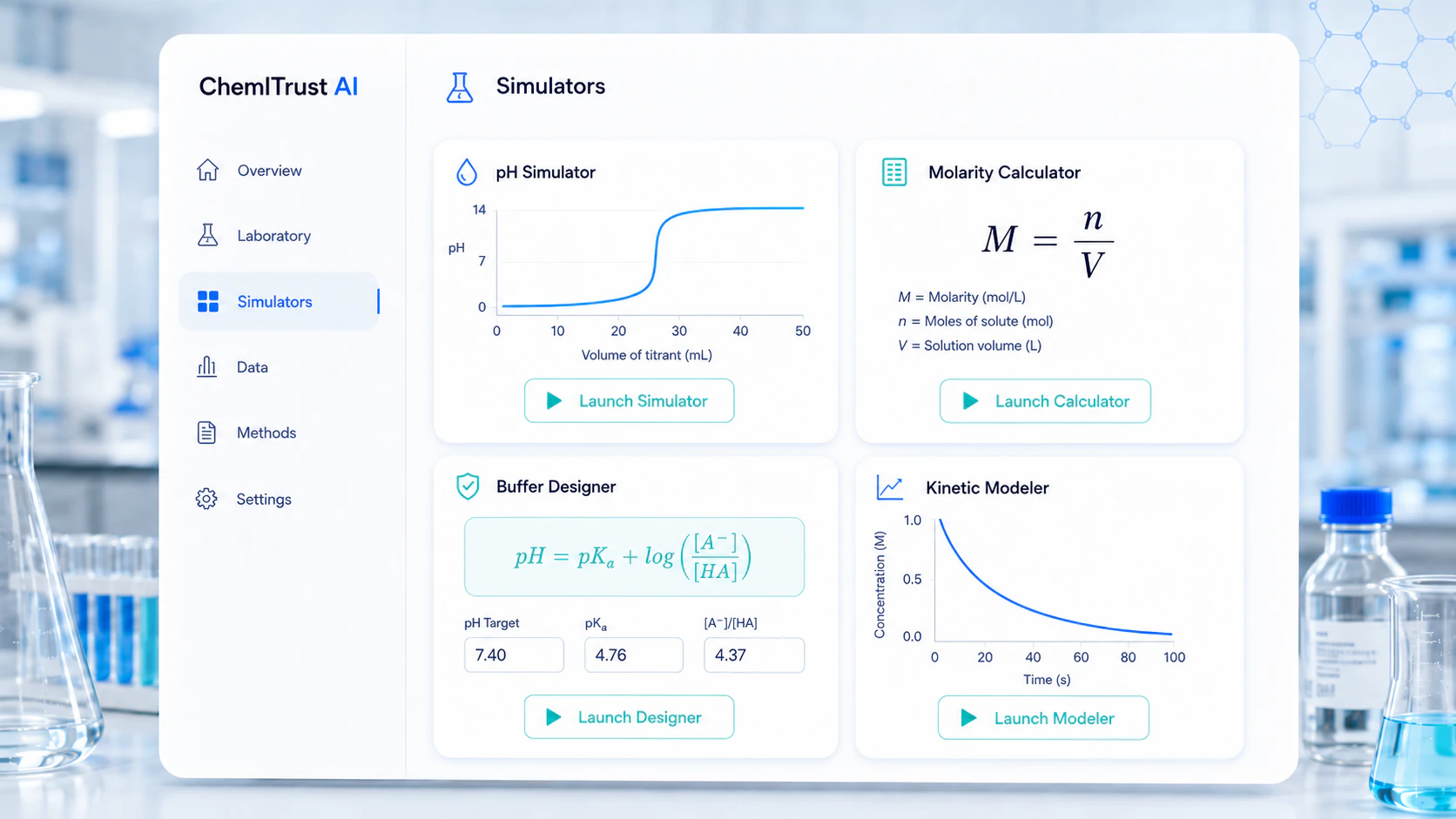
pH simulators, molarity calculators, buffer designers and kinetic modelers - built in.
No manual typing.
ChemVoice turns your speech into structured text that is ready to use.
Your work is not used for training.
Structures, data and protocols stay out of public training pipelines.
Each researched answer is rated.
A confidence level and the reason for it, so a thin answer looks thin.
When a chatbot hands you an answer with no working shown, how much of your day goes into verifying it before you can use it?
Describe the symptom - drifting baseline, split peaks, unstable pressure, poor ionisation - and work through the likely causes against manufacturer documentation, application notes and published methods, rather than a forum thread of unknown origin. Each suggested check comes with what it rules out.

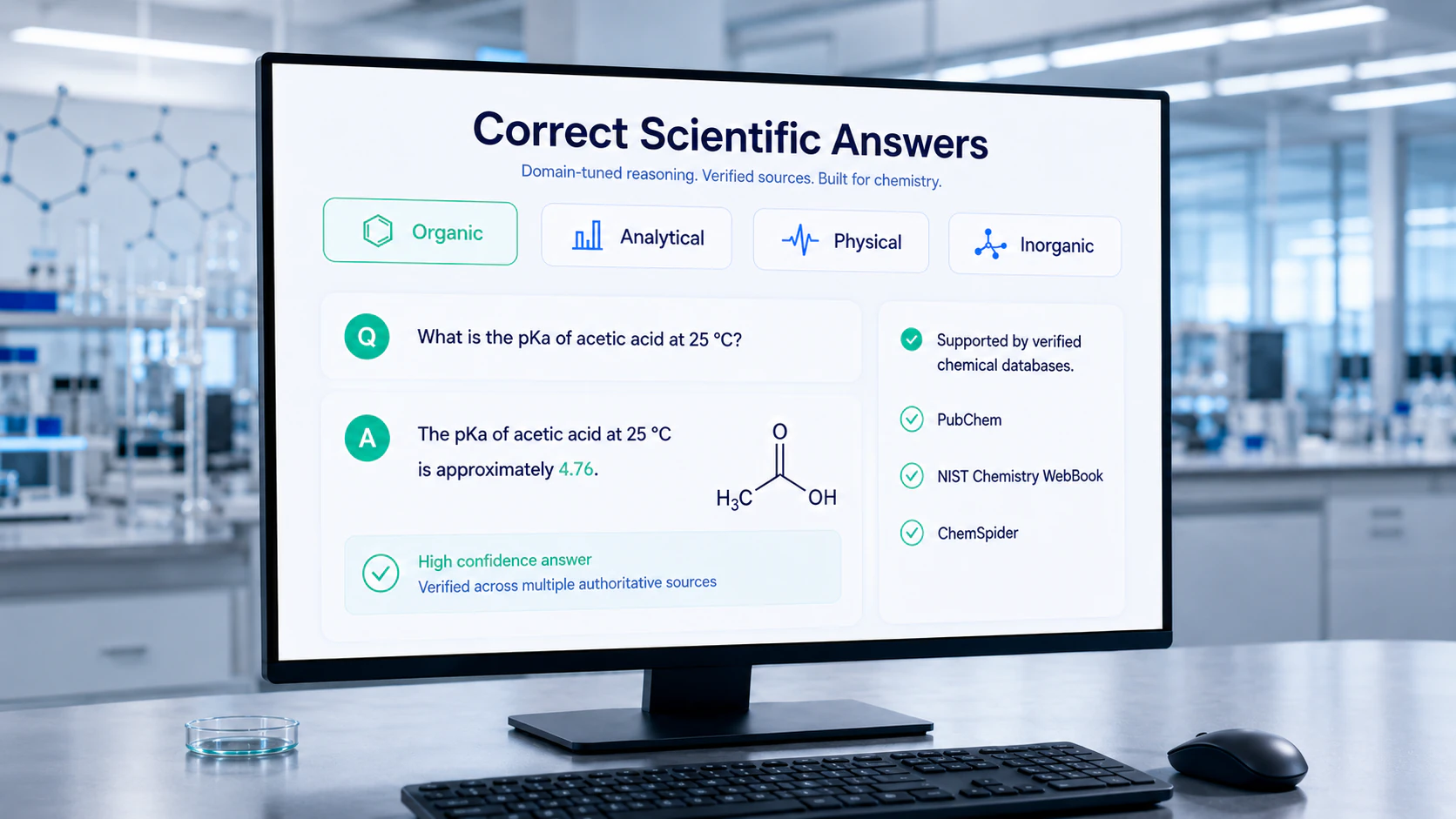
Reasoning tuned across 40 different fields of chemistry - organic, analytical, physical and inorganic among them - with claims checked against the chemical databases the answer drew on. Where an answer rests on published research, the papers behind it are cited so you can read them yourself.
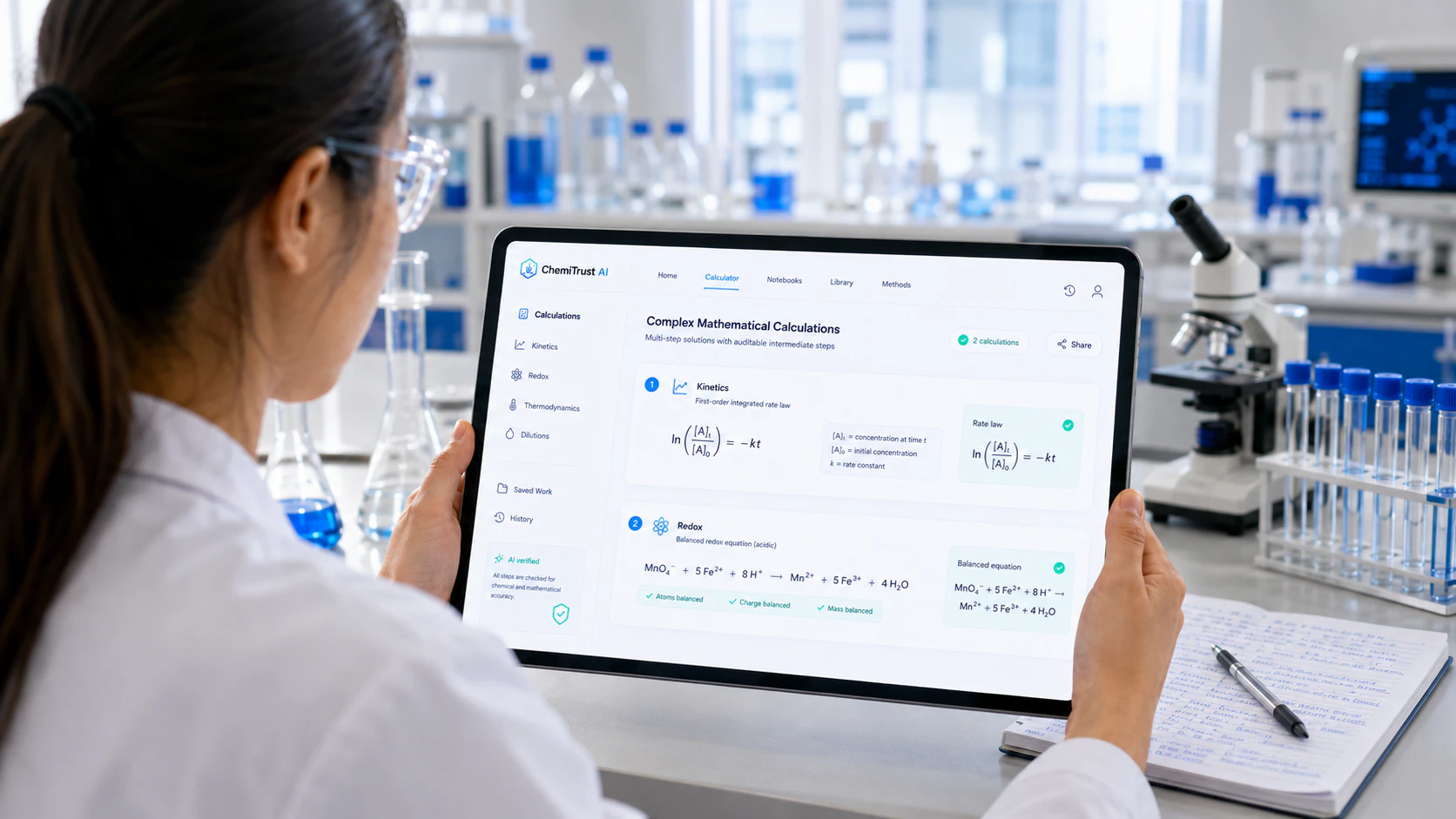
Multi-step stoichiometry, equilibrium expressions, kinetics integrals and balanced redox equations - worked through with the intermediate steps visible, so you can follow the reasoning rather than trust a final number.
One-click invocation of pH simulators, molarity calculators, buffer designers, and kinetic modelers - fully integrated, no tab switching.
Work through synthesis routes with an assistant that shows the data behind each step.
Optimize instrument settings and troubleshoot a run that has gone wrong.
Master chemistry concepts with guided help and practice problems.
Create high-quality lesson plans and clear scientific visuals.
Support your scientific teams with tools that show their working for R&D, documentation and quality tasks.
When the chat researches your question, it rates the evidence it found. A strong rating means the evidence held up under review. A weaker one is a prompt to check the details yourself before you rely on it.
The retrieved evidence agreed and held up under review. Reasonable to work from, with the underlying data shown whenever you want to check it.
Usable, but check the underlying data before the answer informs a decision, a method or a report.
Thin or unvetted evidence. That does not make the answer wrong - only unconfirmed, so check it before you rely on it.
ChemITrust AI Chat supports scientific thinking rather than replacing it. The rating exists so the judgement stays yours - verify anything that affects a critical lab decision or a safety standard.