
Access is expensive
Students need access to scientific tools that are priced for industry, not for coursework.
Four separate pressures, usually landing on four separate budgets.
Students need access to scientific tools that are priced for industry, not for coursework.
Faculty are adopting AI without clear indicators of scientific reliability.
Researchers move between multiple systems that do not talk to each other.
Departments and libraries have to defend each additional software line, every renewal.
The same workspace, earning its place differently for each group that opens it.
Learn chemistry, explore mechanisms, perform calculations, draw molecules, and ask scientific questions.
Give students practical scientific tools they can use throughout their coursework.
Prepare teaching materials, explore chemistry questions, demonstrate structures, perform calculations, and introduce responsible scientific AI use.
Spend less time switching between tools and more time teaching.
Troubleshoot methods, investigate technical questions, document observations, draw structures, and organize research files.
Support research workflows from the same platform.
What each one is for when the user is a student, an instructor or a research group.
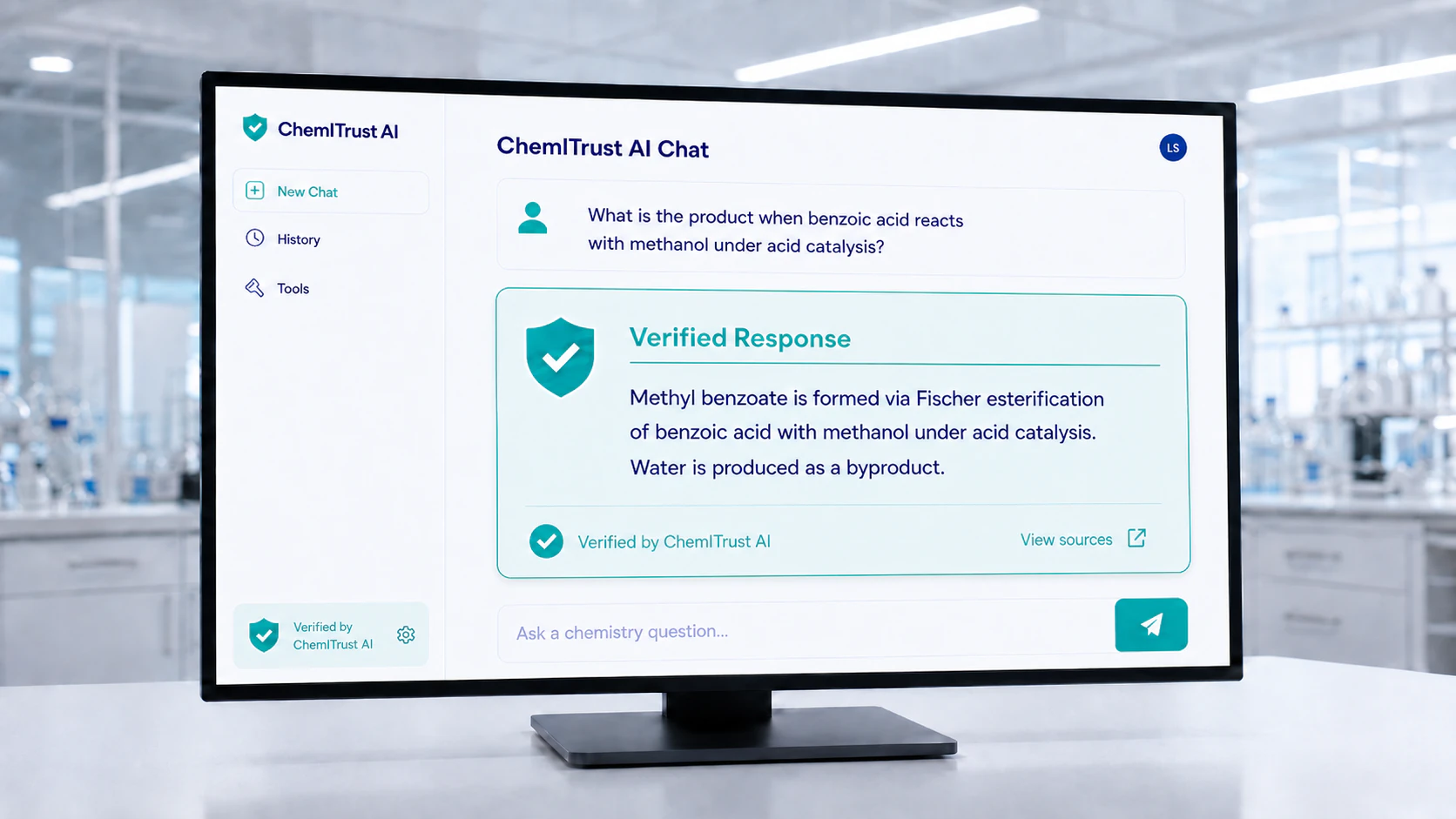
Scientific AI students can learn to evaluate - not simply trust. Ask chemistry questions and review supporting information and confidence ratings.
See the chat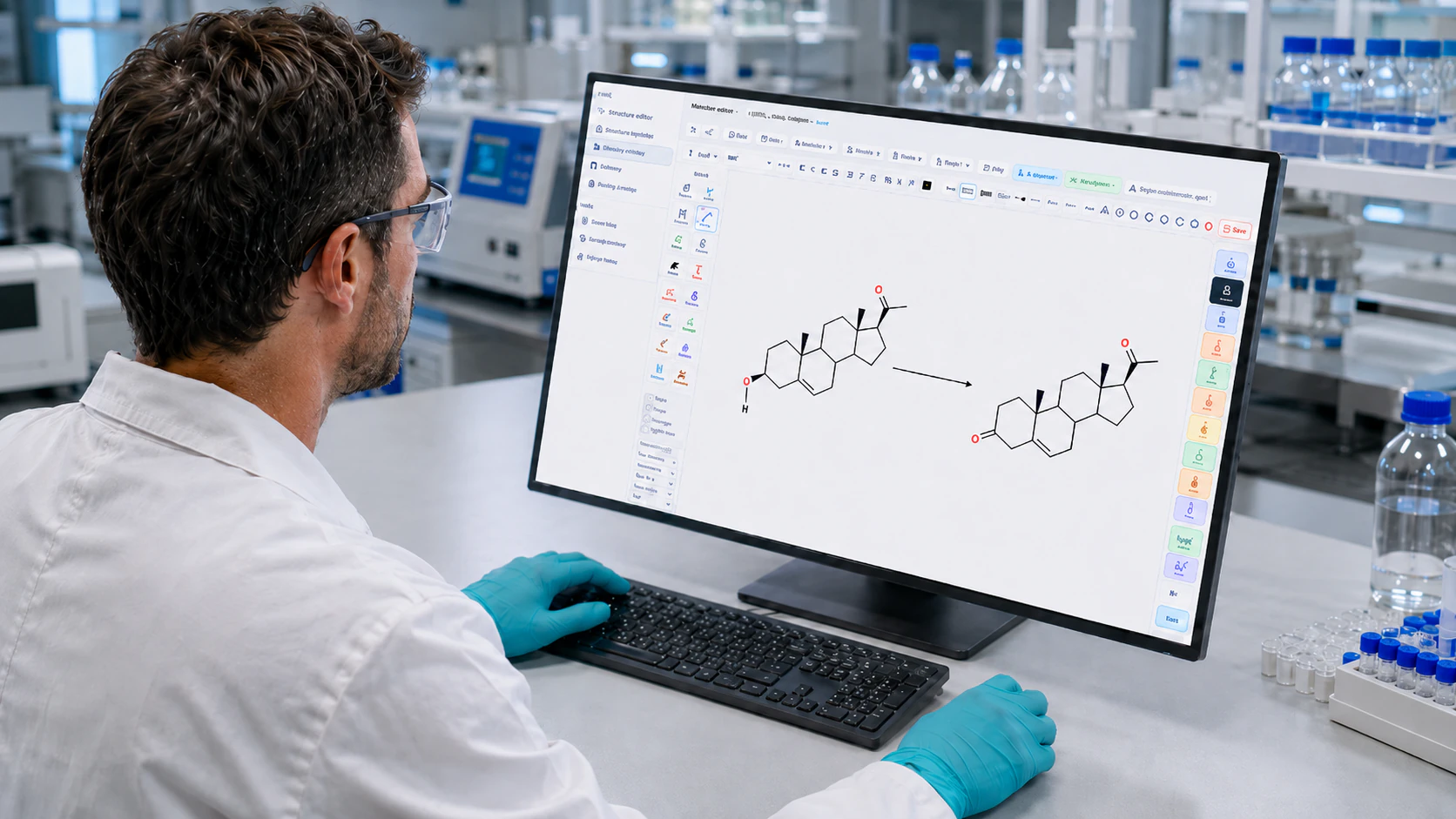
Molecular drawing accessible to students and researchers. Draw structures, calculate properties, visualize molecules, and export them.
See MolCaptiv8er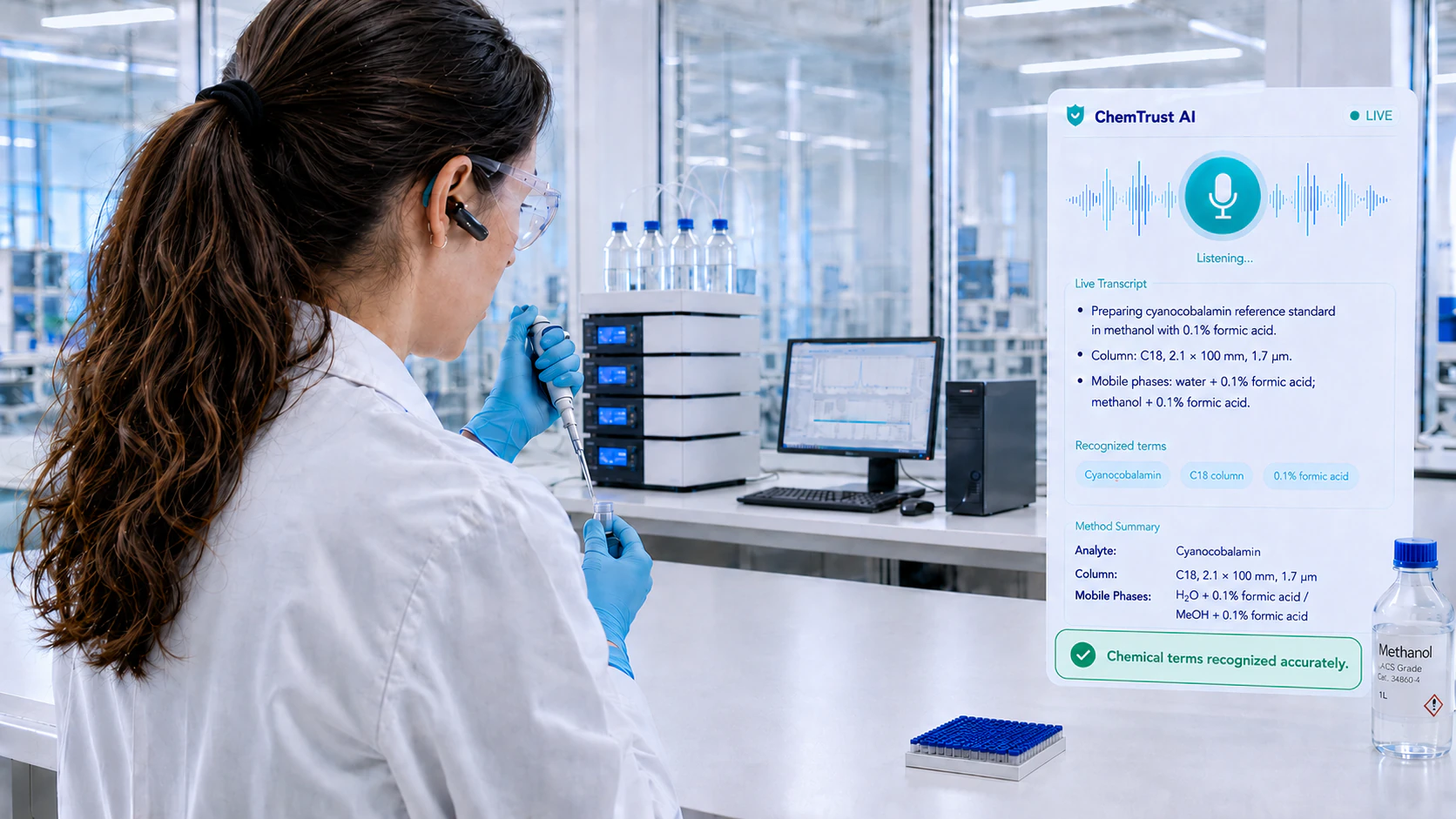
Capture laboratory work without stopping to type. Students and researchers can convert spoken observations into organized scientific text.
See ChemVoice
Keep research and scientific files organized. Useful for research groups, student projects, and scientific data management.
See SpectraVaultStudents are already using AI. The more important question is whether they know when to trust it. ChemITrust AI provides confidence indicators and scientific context designed to encourage students to evaluate AI-generated answers rather than accept them automatically.
The habit is the lesson: an answer is a starting point until the evidence behind it has been looked at.
The same account, put to work at every stage of a chemistry program.
Calculations, structures, terminology, concepts.
Mechanisms, reactions, structures, molecular properties.
Instrumentation, methods, chromatography, spectroscopy, calculations.
Troubleshooting, documentation, scientific questions, file organization.
One platform can give students, faculty and research groups access to a set of scientific tools that would otherwise be bought, licensed and administered separately.
Reduce the need for multiple separate software subscriptions while giving students and faculty tools they can actually use.
Start wherever it makes sense, and widen it when it has earned the room.
Start using ChemITrust AI immediately, on the free tier or a Student plan, with nothing to install and nothing to procure.
Provide shared access across a teaching team or a research group, so coursework and projects sit in the same workspace.
Offer ChemITrust AI as a scientific resource across programs and departments. Site licensing and custom usage limits are scoped with our team.
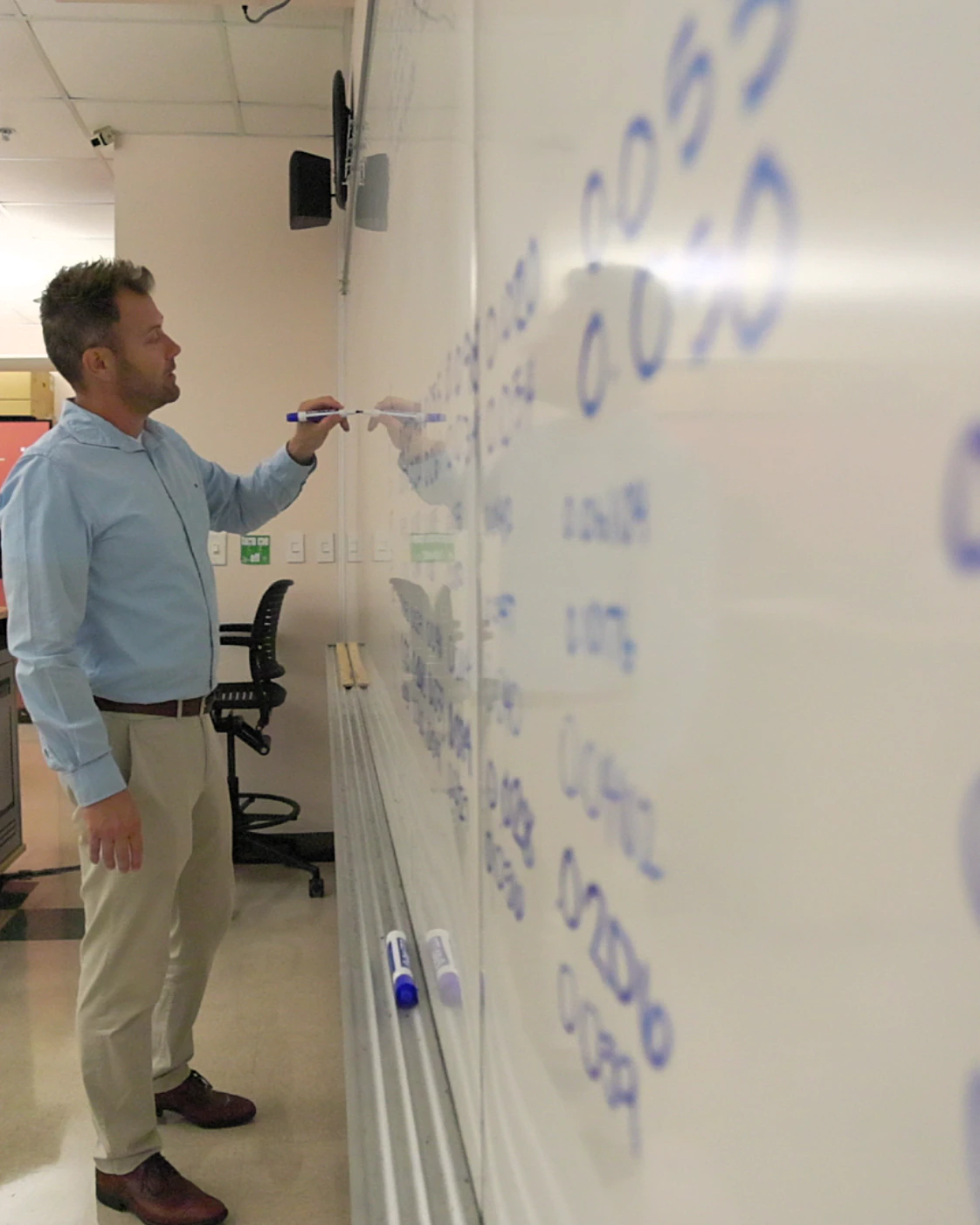
As a chemistry professor and researcher, I built ChemITrust AI around problems I see in laboratories and classrooms every day - from repetitive documentation to scattered software and unreliable AI answers.
The confidence ratings exist because I want students to ask how strong an answer's evidence is before they use it. That is a teaching goal before it is a product feature.