Guard Column Selection for Complex Sample Matrices
Troubleshoot Guard Column Selection for Complex Sample Matrices: isolation steps and corrective actions to minimize carryover.
Executive Overview
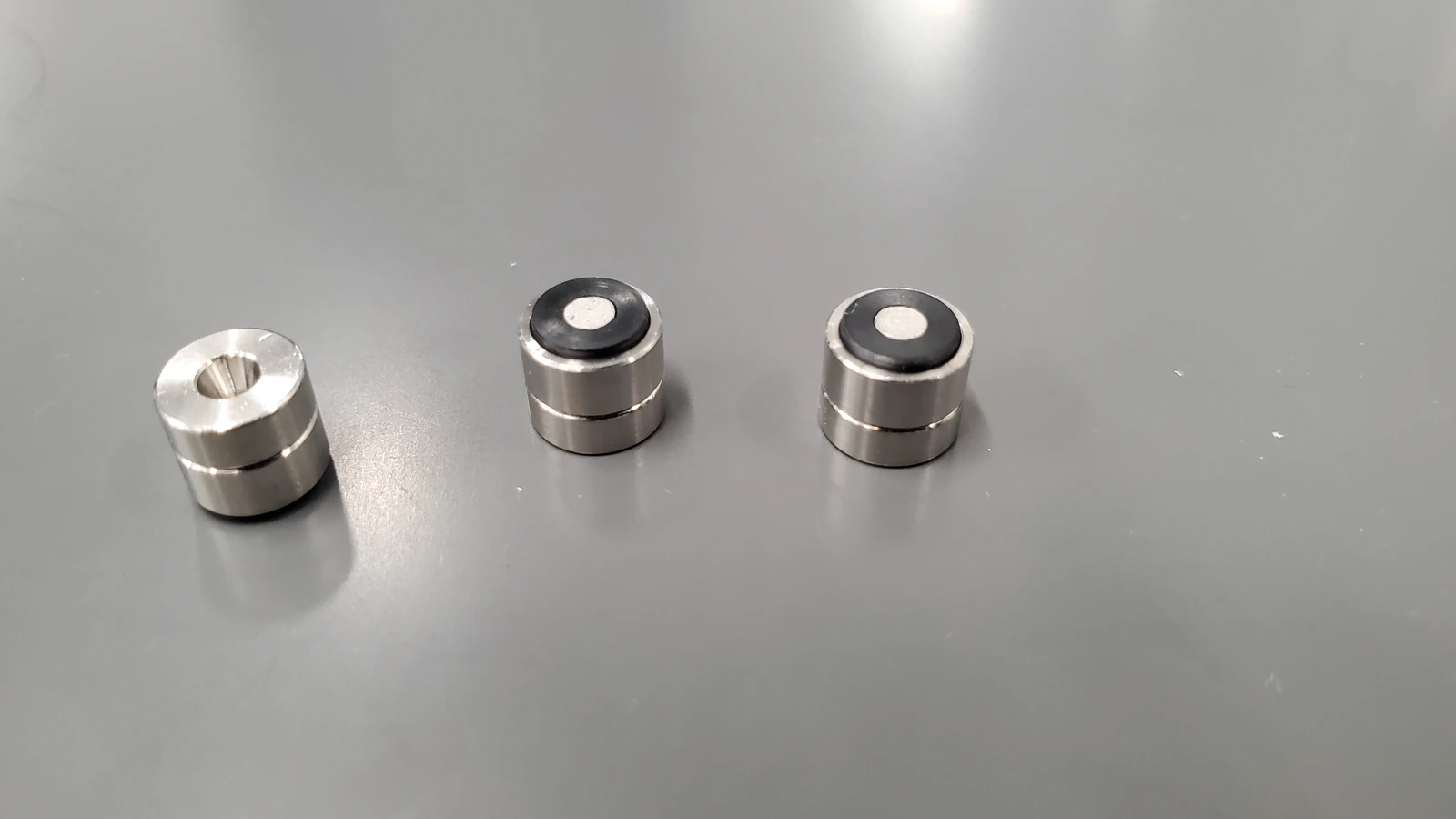
Guard columns are short, sacrificial columns installed upstream of an analytical column to protect it from particulates, strongly retained matrix components, irreversible adsorbates, and chemical fouling. In complex sample matrices—environmental, food, clinical, pharmaceutical, petrochemical, polymer, and industrial—guard column strategy is often the difference between stable system suitability and constant troubleshooting.
A properly selected guard column should:
Extend analytical column lifetime
Maintain retention and selectivity reproducibility
Reduce peak distortion caused by fouling and particulate blockage
Minimize contamination of detectors (especially LC–MS sources)
Reduce downtime and unplanned column replacement costs
This technical guide provides a step-by-step framework for selecting, installing, maintaining, and troubleshooting guard columns for HPLC and UHPLC, with practical notes for LC-UV and LC-MS workflows.
1. What a Guard Column Does (and What It Does Not Do)
1.1 What Guard Columns Do
Guard columns protect the analytical column from:
Particulates and insoluble debris
Strongly retained hydrophobic and hydrophilic matrix components
Polymerized, precipitated, or aggregated species
Metal-binding or reactive species that can irreversibly adsorb
Late-eluting contaminants that accumulate during gradients
They also reduce unscheduled downtime and stabilize routine performance in high-throughput environments.
In LC–MS, guard columns reduce the amount of nonvolatile or dirty matrix reaching the MS source, improving long-term stability and reducing cleaning frequency.
1.2 What Guard Columns Do Not Do
Guard columns are not a substitute for:
Proper sample preparation and filtration
Correct injection solvent composition
Robust mobile-phase preparation and miscibility control
Correct extra-column volume management (especially in UHPLC)
A guard column that is mismatched or installed with dead volume can worsen peak shape and efficiency.
2. When Guard Columns Are Strongly Recommended
Guard columns are most valuable when any of the following are true:
2.1 Complex Matrices with Variable Cleanliness
Common examples:
Environmental waters, soils, leachates (humics, colloids, fine particulates)
Food and beverages (fats, proteins, pigments, sugars, emulsifiers)
Biological fluids and extracts (proteins, phospholipids, salts, metabolites)
Petrochemical and lubricant samples (heavy hydrocarbons, additives, asphaltenes)
Polymer/resin samples (oligomers, monomers, additives)
2.2 High Load Conditions
Large injection volumes
High concentration samples
Long sequences or campaign runs
2.3 Gradient Methods
Gradient elution increases risk of late-eluting matrix accumulation, which can gradually foul the analytical column and detector.
2.4 LC–MS Workflows
MS sensitivity and source stability are particularly vulnerable to matrix contamination and nonvolatile buildup.
3. The Core Rule: Match the Guard to the Analytical Column
3.1 Stationary Phase Chemistry Matching
The most robust default strategy is to choose a guard column with the same stationary phase chemistry as the analytical column, to preserve selectivity and retention reproducibility.
Reversed-Phase (RP)
Match as closely as possible:
Bonded phase (C18 with C18, C8 with C8, phenyl with phenyl)
Base material class (silica vs hybrid)
Endcapping style
Carbon load class (when available)
HILIC
Match:
Functional class (amide, zwitterionic, diol)
Base matrix (silica vs polymeric)
Surface charge behavior
Ion Exchange (IEX)
Match:
Functional group (SCX, SAX, WCX, WAX)
Capacity class
Support type (polymeric vs silica-based)
Size Exclusion (SEC)
Match:
Pore size distribution
Base matrix (silica vs polymer)
Solvent family used in the method
3.2 When to Use a “Complementary” Guard (Only with Validation)
If the matrix fouling mechanism is dominated by a specific interaction, a complementary guard may provide additional trapping capacity (for example, capturing strongly retained hydrophobes). However, this can shift selectivity or cause partial analyte loss. Use this approach only when:
Standards show no significant analyte loss
Retention and selectivity remain consistent
System suitability passes under routine conditions
4. Dimensions and Format: Selecting Guard Geometry for HPLC vs UHPLC
4.1 Length
HPLC: 10–20 mm is common
UHPLC: 3–5 mm is preferred to minimize pressure and dispersion
Very short guards (3–10 mm) reduce band broadening but may load faster in dirty matrices
4.2 Internal Diameter (ID)
Match analytical column ID to maintain flow profile and minimize dispersion:
4.6 mm guard for 4.6 mm analytical column
3.0 mm guard for 3.0 mm analytical column
2.1 mm guard for 2.1 mm analytical column
4.3 Particle Size
Match particle size to preserve efficiency and predictable pressure:
5 µm guard with 5 µm analytical column
1.7–2.0 µm guard with UHPLC analytical columns
A mismatched particle size can cause:
Unnecessary pressure increase
Band broadening
Unexpected retention shifts
4.4 Format Choice: Cartridge vs Packed Guard
Cartridge-style guards with holders are convenient and often reduce connection dead volume
Packed guard columns with standard fittings offer flexibility but require meticulous zero-dead-volume connections
5. Frit and Filtration Strategy (The Most Common Failure Point)
5.1 Frit Rating
Choose frit pore rating that is equal to or finer than the analytical column frit to prevent particulate transfer into the analytical column while avoiding excessive plugging.
5.2 Inline Filters Upstream of the Guard
For heavy particulate loads, add a precolumn inline filter upstream of the guard (commonly 0.2–2 µm). This intercepts larger debris so the guard does not rapidly plug.
Practical concept:
Inline filter protects the guard bed
Guard protects the analytical column chemistry and inlet frit
Together they reduce risk of catastrophic pressure spikes
6. Hardware Materials and Chemical Limits
6.1 Hardware Material Selection
Stainless steel: general use and most standard applications
PEEK or titanium: useful when metal-sensitive analytes are present (common in bioanalytical and LC–MS workflows)
6.2 Chemical Stability Must Match the Method
Guard column stability must be consistent with the analytical column’s operating window:
Silica-based RP: commonly usable around pH 2–8 (confirm limits)
Hybrid silica and polymeric phases: broader pH ranges may be possible
Temperature: ensure guard is rated for the method temperature (often up to 60–80 °C depending on design)
7. Pressure and Performance Impact: What Is “Acceptable”?
Guard columns add backpressure and extra-column volume.
Typical added pressure (approximate, method-dependent):
4.6 mm ID, 10 mm length, 5 µm: about 5–15 bar at 1.0 mL/min with mixed organic/water
2.1 mm ID, 5 mm length, 1.7–2 µm: about 20–40 bar at 0.3–0.5 mL/min
Acceptance targets many labs use:
Retention time shift: ≤1–2%
Efficiency loss: ≤5%
No meaningful loss of resolution for critical pairs
Verify by running your system suitability test before and after guard installation.
8. Installation Best Practices (Where Most Problems Are Created)
To avoid creating extra-column dispersion and dead volume:
Use zero-dead-volume fittings
Use the shortest practical tubing between injector → guard → analytical column
Confirm flow direction arrows and avoid mechanical shock
Precondition the guard with mobile phase before first use
Bring flow up gradually and avoid abrupt solvent changes
Document:
Installation date
Method parameters
Baseline backpressure and system suitability metrics
9. Maintenance and Replacement Strategy
9.1 What to Monitor
Track trends under fixed method conditions:
Backpressure at a fixed flow and composition
Peak shape (tailing, broadening)
Retention reproducibility
Critical resolution and suitability metrics
9.2 Cleaning and Regeneration (If the Guard Allows It)
If manufacturer permits reverse flushing:
Backflush at reduced flow using compatible solvents
Increase elution strength gradually
Stay within pH and solvent limits
General approach:
RP: aqueous → mixed → strong organic (and optional stronger eluotrope if compatible)
HILIC: high organic → aqueous (and salt in water if permitted) → high organic
9.3 Replacement Criteria
Common replacement triggers:
Backpressure rises by 20–30% relative to baseline
System suitability fails (tailing, plates, retention, resolution)
Evidence of analyte loss due to trapping
Persistent carryover or memory effects that trace to the guard
10. Matrix-Specific Guard Strategies
10.1 Environmental Samples
Issues: humics, colloids, particulates, metal complexes
Recommendations:
Match RP C18 guard to analytical RP phase for organic contaminants
Consider PEEK/titanium hardware for metal-sensitive MS workflows
Add upstream inline filter for suspended solids
10.2 Food and Beverage
Issues: proteins, lipids, pigments, sugars, emulsifiers
Recommendations:
Match RP C18/C8 guard to main column for broad profiling
For HILIC, match amide or zwitterionic guard to main phase
Schedule periodic strong washes to clear hydrophobic residues
10.3 Biological Matrices
Issues: proteins, phospholipids, salts
Recommendations:
RP guard matched to the bioanalytical column
Metal-free hardware when adsorption is suspected in MS
Strong wash segments in gradients and proactive guard replacement
10.4 Petrochemical and Industrial
Issues: heavy hydrocarbons, additives, asphaltenes, particulates
Recommendations:
Short, robust guard matched to main phase
Inline filter strongly recommended
Periodic strong organic washes
10.5 Polymer Analysis
Issues: oligomers, additives, high-mass species
Recommendations:
SEC guard matched in pore size and matrix to the analytical SEC column
Maintain solvent purity and stable temperature to avoid viscosity artifacts
11. Performance Verification: How to Prove the Guard Is Not Hurting the Method
Before and after installation, run a system suitability test and compare:
Retention factor (k)
Plate count (N)
Tailing factor or asymmetry
Resolution (Rs) of a critical pair
Acceptance:
Minor retention shifts with stable selectivity
No meaningful band broadening
System suitability still passes
If performance drifts beyond criteria:
Check fittings, dead volume, guard condition, and dimensional matching.
12. Troubleshooting Guide
Symptom: Rapid Backpressure Increase
Possible causes:
Particulate plugging of guard frit or bed
Precipitation due to solvent mismatch or sample composition
Actions:
Stop flow and inspect upstream inline filter
Reverse flush guard if permitted, then restore flow gradually
Verify sample filtration and solvent miscibility
Replace guard if pressure does not normalize
Symptom: Peak Broadening or Tailing
Possible causes:
Dead volume in fittings or holder
Mismatched particle size or ID
Overloaded/fouled guard trapping analytes
Actions:
Reinstall with zero-dead-volume fittings and shorter tubing
Confirm dimensions and particle size match
Clean or replace guard; re-verify with standards
Symptom: Retention Time Shifts
Possible causes:
Guard chemistry mismatch
Temperature or flow instability
Guard saturation altering phase properties
Actions:
Replace with identical chemistry to analytical column
Confirm equilibration and method stability
Replace guard and re-establish baseline
Symptom: Baseline Noise or Ghost Peaks (LC-UV or LC-MS)
Possible causes:
Late-eluting matrix bleeding from guard
Contamination upstream
Actions:
Implement periodic strong wash steps
Improve sample cleanup
Replace guard and verify solvent purity
Symptom: Carryover Increase
Possible causes:
Strongly retained species on guard acting as a reservoir
Actions:
Add high-strength wash steps between injections
Improve sample preparation
Replace guard and confirm it is not trapping target analytes
13. Decision Checklist (Use This Before You Purchase or Install)
Is guard chemistry identical to the analytical column?
Do length, ID, particle size, and frit rating match method needs?
Are hardware materials compatible with analytes and detector (especially MS)?
Is upstream filtration adequate for the matrix?
Are all connections truly zero-dead-volume?
Is added pressure within instrument limits?
Is a maintenance plan defined (cleaning and replacement criteria)?
Summary
Guard columns are essential for robust HPLC and UHPLC methods in complex sample matrices. The strongest strategy is to select a guard that matches the analytical column’s stationary phase chemistry, ID, and particle size, while controlling frit rating, connection dead volume, and upstream filtration. Proper installation and a disciplined maintenance schedule prevent the most common failure modes: rising backpressure, peak distortion, retention drift, and detector contamination. System suitability verification before and after installation ensures the guard protects performance rather than degrading it.