Guard Column Blockage and Rising Backpressure in HPLC
Practical guide to diagnose Guard Column Blockage and Rising Backpressure in HPLC: what to check first and how to correct it to prevent pressure-related shutdowns.
Technical Troubleshooting and Corrective Strategies
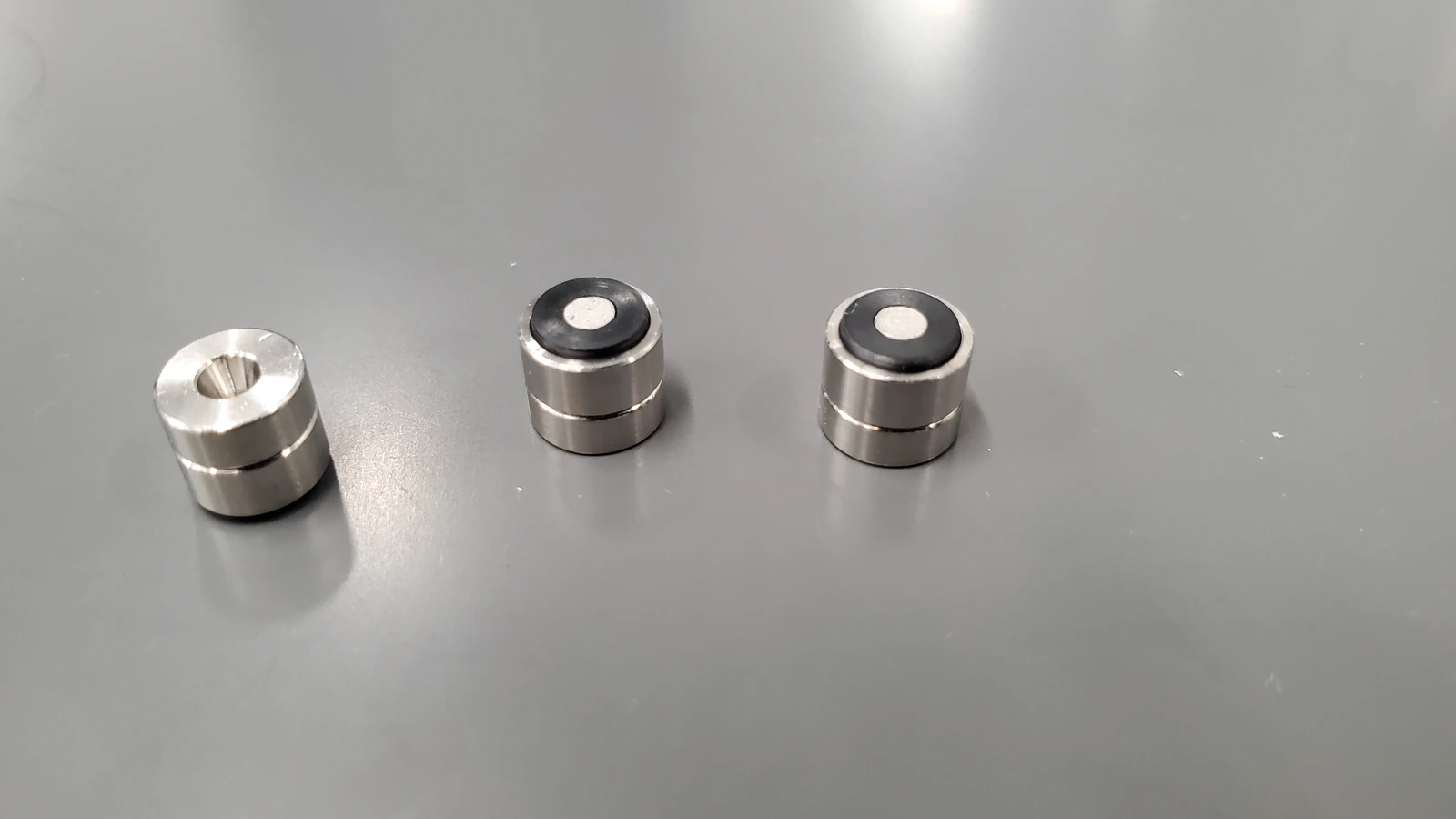
The most effective guard column is one that is packed identically to the analytical column it protects. Mismatched guard phases often fail to provide protection and can introduce unintended changes in selectivity.
Overview and Context
Guard columns are sacrificial components installed upstream of the analytical column to protect the inlet region from particulate matter, strongly retained matrix components, and chemical fouling. A rising system backpressure accompanied by deteriorating peak shape is a classic early indicator of fouling at the guard column and/or at the head of the analytical column.
In most cases, fouling develops as a narrow, highly retained band at the column inlet. This localized accumulation restricts interstitial flow paths, leading first to increased backpressure. As the packed bed compresses and rearranges locally, chromatographic efficiency deteriorates, manifesting as peak fronting, tailing, or loss of resolution.
Replacing the inlet frit is only effective when the frit itself is physically blocked. In practice, the dominant restriction usually forms within the packed bed at the column inlet rather than at the frit surface.
Key Symptoms
Gradual or sudden increase in backpressure at constant flow rate and mobile phase composition.
Loss of efficiency, including broader peaks, increased tailing, or peak fronting, often most pronounced for early-eluting analytes.
Retention time drift or increased dwell time for strongly retained compounds if the inlet bed is distorted.
Guard column noticeably warmer than downstream components due to increased flow resistance and energy dissipation.
Likely Root Causes
Strongly retained, high-molecular-weight, or poorly soluble species forming a narrow adsorbed band at the column inlet.
Precipitation of salts or buffer components under high organic content, leading to clogging of interstitial spaces.
Adsorption of matrix components such as proteins, lipids, polymers, or surfactants onto the stationary phase.
Injection solvent strength mismatch causing analytes or matrix components to precipitate or focus improperly at the column head.
Insufficient sample or mobile-phase filtration allowing particulate ingress into the guard or analytical column.
When rising backpressure coincides with peak shape degradation, the initial particle layers at the column inlet have likely compressed and rearranged, compromising bed homogeneity.
Immediate Safety and Compatibility Checks
Confirm that operating pressure remains below the column’s specified maximum.
Verify solvent compatibility with tubing, frits, and stationary phase chemistry.
Ensure pH and solvent composition remain within column operating limits.
Set instrument pressure limits conservatively to prevent mechanical damage.
Confirm that no precipitation occurs during mobile-phase transitions, particularly when moving from buffered aqueous phases to high organic content.
Diagnostic Workflow
System Depressurization
Stop the chromatographic method.
Open the purge or relief valve.
Reduce flow to zero and allow pressure to dissipate fully.
Isolation of Pressure Contributions
Remove both the guard and analytical column and replace them with a zero-dead-volume union.
Operate at the original flow rate and record baseline system pressure.
Install the guard column alone and note the pressure increase.
Install the analytical column alone and record pressure.
Install the guard and analytical column in series and record total pressure.
Interpretation:
Elevated pressure with the guard alone indicates guard blockage.
Normal guard pressure but elevated column pressure indicates fouling at the analytical column head.
Elevated pressure in both configurations indicates contamination in both components.
Guard Inspection
For cartridge-style guards, remove and inspect the inlet end for discoloration or debris accumulation.
If using replaceable frits, recognize that frit replacement alone rarely resolves inlet-bed fouling.
Verification of Mobile Phase and Sample Preparation
Confirm buffer solubility across the full range of mobile-phase compositions.
Verify appropriate sample filtration.
Review injection solvent composition relative to the initial mobile phase.
Corrective Actions
Guard Column Replacement
Replace the guard with one using identical stationary phase chemistry, particle size, and pore size as the analytical column.
Prefer direct-connect cartridge designs to minimize dead volume and dispersion.
Guard Backflushing
Reverse the guard column orientation if permitted.
Operate at a reduced flow rate appropriate for column dimensions.
Flush with solvents capable of dissolving the retained fouling species.
Continue flushing until pressure recovery is observed.
Analytical Column Backflushing
Confirm that the analytical column supports reverse-flow operation.
Disconnect the detector or direct effluent to waste during cleaning.
Use a staged solvent sequence progressing from weak to strong eluents.
Monitor pressure continuously and remain within rated limits.
After cleaning, restore forward flow and re-equilibrate thoroughly before analysis.
Inline Pre-Column Filtration
Install a low-dead-volume inline filter upstream of the guard to intercept particulates.
Replace filters routinely to reduce load on the guard and analytical column.
Frit Replacement
Replace inlet frits only if pressure remains elevated after backflushing and fouling is confirmed at the frit.
Recurring fouling after frit replacement indicates insufficient sample or mobile-phase cleanup.
Method and Sample Preparation Improvements
Match injection solvent strength closely to the initial mobile-phase composition.
Filter all samples using appropriate membrane materials and pore sizes.
Centrifuge viscous or particulate-rich samples prior to filtration.
Apply sample cleanup techniques such as protein precipitation or solid-phase extraction for complex matrices.
Incorporate strong-solvent wash steps between injections and periodic maintenance flushes.
Guard Column Selection and Configuration
Selection Criteria
Stationary phase chemistry identical to the analytical column.
Matching particle size and pore diameter.
Compatible internal diameter and connection geometry.
Connection Practices
Use direct-connect designs whenever possible.
Minimize tubing length and internal diameter when connections are required.
Ensure clean, square cuts and properly seated fittings.
Replacement Strategy
Monitor pressure differential across the guard.
Replace the guard when pressure contribution increases significantly or when peak shape degradation is observed.
Maintain spare guard cartridges to minimize downtime.
Decision Guide: Repair Versus Replacement
Replace the guard immediately when elevated pressure is clearly attributable to the guard alone.
Attempt analytical column backflushing when inlet fouling is suspected and reverse flow is permitted.
Replace the analytical column if pressure and performance do not recover or if irreversible bed damage is evident.
Instrument-Level Considerations
Inspect and replace solvent inlet filters as needed.
Verify degasser performance to prevent bubble formation.
Confirm stable mixer performance and consistent gradient formation.
Ensure autosampler needle wash solvents are sufficiently strong to prevent carryover fouling.
Summary
Rising backpressure accompanied by deteriorating peak shape is most commonly caused by the formation of a strongly adsorbed, localized band at the column inlet. This fouling compresses the packed bed and restricts flow pathways. In most cases, replacing or backflushing the guard column provides rapid recovery. When the analytical column head is affected, controlled backflushing can often restore performance if fouling is not irreversible. Long-term prevention relies on matched guard selection, effective sample preparation, appropriate injection solvent strength, and routine maintenance flushing.