How often should I replace check valves, seals, frits, and inline filters?
This article outlines typical replacement intervals for critical HPLC components to maintain pressure stability and performance.
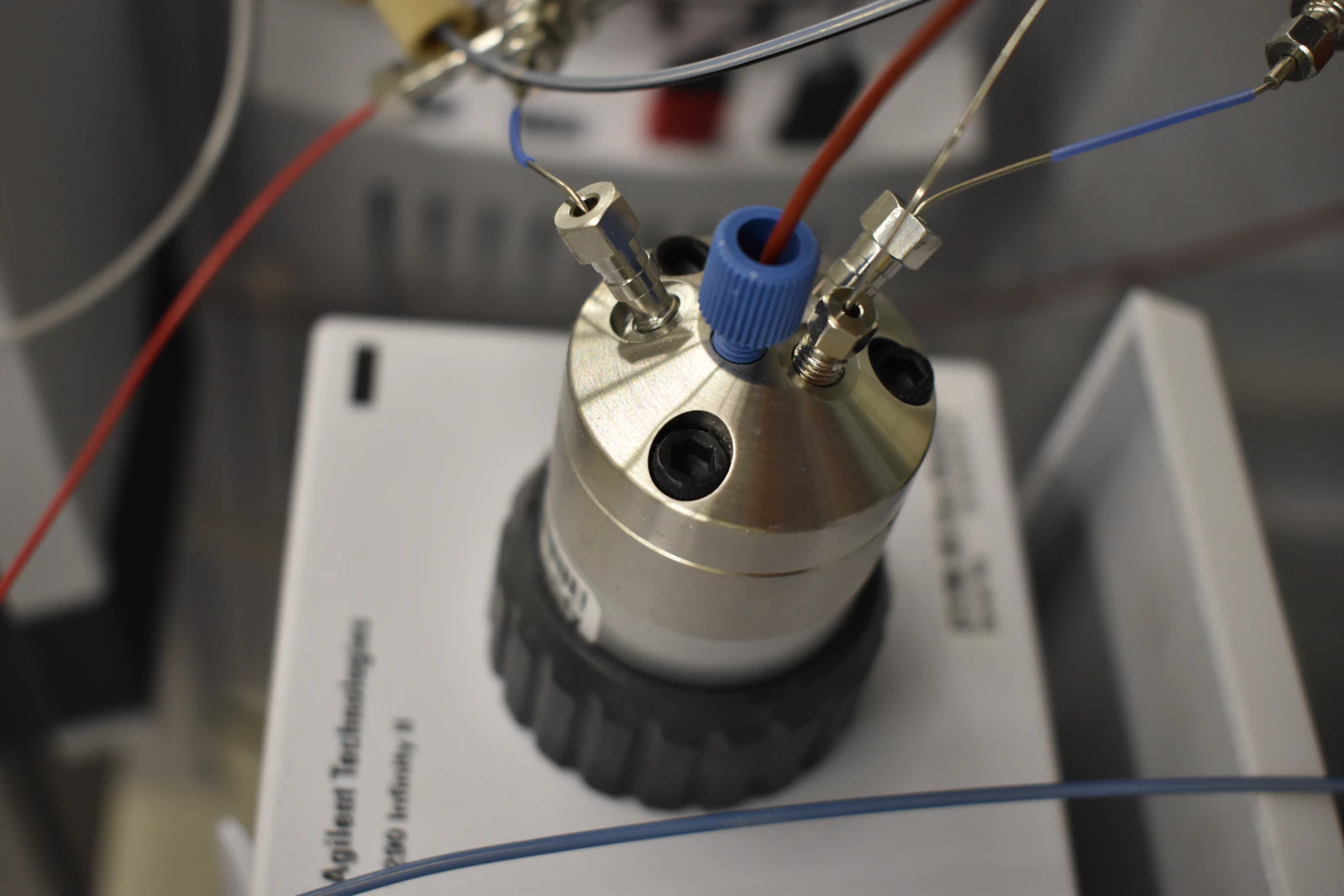
Preventive Replacement Guide for LC Systems
Check Valves, Pump Seals, Rotor Seals, Frits, and Inline Filters in HPLC/UHPLC
Preventive replacement of key fluidic components is one of the highest-ROI practices in liquid chromatography. Many “mystery” problems—pressure ripple, drifting retention times, noisy baselines, failed priming, and sudden backpressure spikes—trace back to aging check valves, worn seals, or progressively clogged filters and frits. A structured replacement plan reduces downtime, protects columns, stabilizes quantitation, and prevents troubleshooting cycles that consume instrument and analyst time.
This guide provides practical replacement intervals and condition-based triggers that analytical chemists can implement as a laboratory standard. The emphasis is on repeatability and fault prevention, not simply replacing parts on a calendar.
Why Proactive Replacement Matters in HPLC/UHPLC
LC systems are precision metering devices operating under high pressure with small internal volumes. Minor wear or contamination in fluidic parts can cause disproportionately large analytical effects:
Check valve wear or contamination can cause flow pulsation, pressure ripple, gradient errors, and difficult priming.
Pump seal wear can introduce microleaks, air ingress, cavitation-like behavior, and unstable pressure/flow.
Inline filters and frits accumulate particulates and precipitates, producing gradual or sudden backpressure increases and erratic flow.
Autosampler rotor seals can cause carryover and injection-path restrictions that masquerade as method failure.
A proactive strategy also improves data integrity: fewer unplanned interventions means fewer batches impacted by reintegration, reprocessing, and questionable system suitability.
What to Track Before You Set Intervals
Replacement timing is best defined by usage and conditions, not by date alone. Track these routinely:
Pump hours (or total run hours)
Injection count per instrument (and per method class, if possible)
Baseline pressure under a standard condition (same solvent, flow, temperature, and a standard restrictor/column)
Pressure ripple amplitude at fixed conditions
Priming behavior (time to prime, ability to hold prime after stops)
Flow accuracy (periodic gravimetric verification)
Once you log these, you can replace parts when performance starts to drift—before failure.
Typical Preventive Replacement Intervals (Practical Ranges)
These ranges reflect common laboratory practice under mixed aqueous/organic conditions and moderate pH. Shorten intervals for high-salt buffers, high pH, particle-laden samples, or frequent high-pressure UHPLC operation.
1) Pump Check Valves (Inlet and Outlet)
Typical interval
HPLC: 6–12 months or roughly 1,000–2,000 pump-hours
UHPLC: 3–6 months or roughly 500–1,000 pump-hours
Replace sooner if you observe
Slow priming or repeated prime failures despite fresh solvent and functional degassing
Increasing pressure ripple at constant flow/solvent/temperature
Flow-rate drift at a fixed setpoint
Backflow behavior in inlet lines or inability to hold pressure after stopping
Why check valves fail
Salt crystals, particulates, and microbial debris interfere with seating
Repetitive cycling causes mechanical wear of the sealing surfaces
Sticky contamination can cause intermittent sticking (the hardest failure mode to diagnose)
Operational note
Buffers and salt-containing phases significantly increase fouling risk. Even when mobile phases look clear, microcrystals can form at seats and frit interfaces over time, especially after shutdowns.
2) Pump Seals (Plunger Seals, Wipers, Associated O-Rings)
Typical interval
HPLC: 6–12 months or 1,000–2,000 pump-hours
UHPLC: 3–6 months or 500–1,000 pump-hours
Replace sooner if you observe
Solvent odor, wetness, or salt crust around the pump head
Intermittent air ingestion, pressure instability, or cavitation-like behavior
Difficulty maintaining stable pressure at constant flow
Unexplained pressure ripple that persists after degassing/priming checks
Why seals fail
Normal frictional wear on plungers
Abrasive particles acting like polishing compound
Chemical attack or swelling from incompatible solvents or extreme pH
Dry running episodes that accelerate wear dramatically
Practical warning
A seal that “almost leaks” can still destabilize flow by allowing air ingress under suction conditions even when no visible external leak is present.
3) Autosampler Rotor Seals (and Related Injection Valve Seals)
Typical interval
Often 10,000–30,000 injections (highly dependent on solvent aggressiveness, temperature, and sample cleanliness)
Replace sooner if you observe
Elevated carryover that does not respond to wash optimization
Wrong-port leakage symptoms
Injection-associated pressure perturbations (pressure spikes/dips during valve switching)
Inconsistent injection volumes or strange peak area variability not explained by sample prep
Why it matters
Rotor seal issues are frequently misdiagnosed as column failure or method carryover. A degraded rotor seal can both leak and restrict flow depending on where debris accumulates.
4) Inline Filters and Guard Columns (Your Primary “Sacrificial” Protection)
These are intended to fail before expensive components do.
Solvent Inlet Filters (Reservoir Frits)
Typical interval
Inspect monthly; replace every 3–6 months, sooner with visible discoloration, slime, or flow starvation symptoms.
Replace sooner if you observe
Slow priming on a specific line
Bubble trains appearing in inlet tubing despite good degassing
Evidence of microbial growth or crystalline deposits
Pre-Column Inline Filters and Guard Cartridges
Typical interval
For clean matrices: often hundreds to low thousands of injections depending on particulate load
For dirty matrices or high-salt methods: commonly 200–500 injections as a practical preventive range
Replace sooner if you observe
Sustained >20% backpressure increase at fixed conditions
Sudden backpressure jumps after injections
Increasing pressure variability, especially if correlated with injection events
Key practice
Inline filters and guard columns are low-cost risk controls. For critical quantitative methods, replacement is usually more reliable than attempting to “recover” them through aggressive cleaning.
5) Column Frits (Integrated Inlet/Outlet Frits)
Columns are usually replaced (or refurbished) when frits are blocked and efficiency declines. If frits are serviceable on your column model, treat replacement as a controlled maintenance event with performance qualification afterward.
Action triggers
Sustained >20–30% increase in backpressure at constant flow/solvent/temperature
Declining efficiency (plate count), worsening tailing, or retention time shifts not explained by mobile phase or temperature
Prevention
Rely on robust precolumn protection (guards/inline filters) and sample filtration rather than trying to “save” a column frit after it becomes loaded.
Condition-Based Triggers That Should Override Calendar Intervals
Calendar intervals are convenient, but condition triggers are more accurate. Replace components when these indicators appear:
A) Backpressure Trending
Establish a baseline pressure using a standard solvent composition and a standard restrictor/column.
Replace precolumn protection or investigate restrictions when pressure rises >20–30% relative to baseline under the same conditions.
B) Pressure Ripple Trending
Increasing ripple at constant conditions is a strong early indicator of check valve or seal degradation.
If ripple increases and priming becomes inconsistent, check valves are often the first suspect.
C) Prime/Hold Behavior
Slow priming, losing prime after stops, or inability to hold pressure are highly characteristic of valve/seal issues.
These symptoms frequently precede visible leakage.
D) Flow Accuracy Verification (Gravimetric)
Periodically verify delivered flow against setpoint.
Meaningful deviation (commonly >1–2% depending on your lab criteria) combined with ripple is a strong trigger for pump maintenance.
E) Visual Inspection
Salt crust near pump head, discoloration on filters, particulate in fittings, or microbial films in reservoirs justify immediate intervention.
Factors That Shorten Component Lifetimes
Certain operating modes consistently reduce service life:
High-salt buffers and inorganic salts: promote crystallization and frit/valve fouling
High pH or chemically aggressive solvents: accelerate seal and rotor wear
Dirty matrices (environmental, biological, polymeric, particulate-rich): load filters rapidly
High-pressure UHPLC operation: increases mechanical stress on seals and valves
Frequent shutdowns without proper flushing: encourages salt deposition and check valve sticking
A Practical Preventive Maintenance Strategy (Lab-Ready)
1) Establish “Clean System” Benchmarks
For each instrument, document:
pressure at a defined flow/solvent/temperature with a known restriction
ripple amplitude under the same condition
priming time for each channel
flow accuracy result (gravimetric)
2) Schedule by Usage, Not Guesswork
Track pump hours and injection counts.
Create method categories if needed (clean vs dirty matrices; buffered vs non-buffered).
3) Standardize Consumable Replacement Rules
Examples of enforceable criteria:
Replace precolumn filter/guard at >20% pressure rise or after a defined injection count for dirty matrices.
Replace check valves/seals at defined hour thresholds or earlier if prime/ripple triggers appear.
4) Keep Critical Spares Ready
OEM check valve kits and seal kits
spare inline filters/guard cartridges
appropriate fittings/tubing segments for rapid isolation tests
A large fraction of downtime comes from waiting on parts—not from the repair itself.
Post-Replacement Qualification (Do Not Skip)
After replacing any fluidic component, confirm performance with objective checks:
System suitability: retention time, peak shape, efficiency, baseline noise
Flow accuracy: gravimetric verification (expect tight deviation consistent with your lab criteria)
Pressure stability: stable baseline pressure and reduced ripple at fixed conditions
This step prevents “maintenance drift” where a repair introduces a new variable (incorrect seating, trapped air, misrouted lines, incompatible materials).
Troubleshooting Decision Guide (Maintenance-Focused)
Backpressure rising but flow stable
Replace inline filters/guard first; then evaluate column restriction.Flow pulsation or pressure ripple at constant setpoint
Check degassing/air first, then service pump check valves and seals.Salt crust, solvent odor, or dampness near pump head
Replace pump seals and inspect plunger condition; verify seal wash performance if used.Carryover or injection-related pressure disturbance
Inspect/replace autosampler rotor seal; verify needle seat condition and wash routine.
Summary
A preventive replacement program for LC systems should combine typical intervals (months, pump-hours, injection counts) with condition-based triggers (pressure trends, ripple, priming behavior, flow accuracy, and visual evidence). In general practice:
Check valves and pump seals are commonly replaced on the order of 6–12 months in HPLC and 3–6 months in UHPLC, sooner with buffers, high pH, or particulate-heavy samples.
Solvent inlet filters are typically replaced every 3–6 months (or sooner with fouling).
Precolumn filters/guards are replaced based on injection load and pressure trending, commonly every few hundred injections for dirty matrices or when pressure rises >20%.
This approach reduces unplanned downtime, stabilizes chromatographic performance, and extends column life by ensuring that sacrificial protection components fail first—by design.