Manual vs Autosampler Injection Reproducibility in HPLC
Practical guide to diagnose Manual vs Autosampler Injection Reproducibility in HPLC: checks, likely causes, and corrective actions to reduce noise and drift.
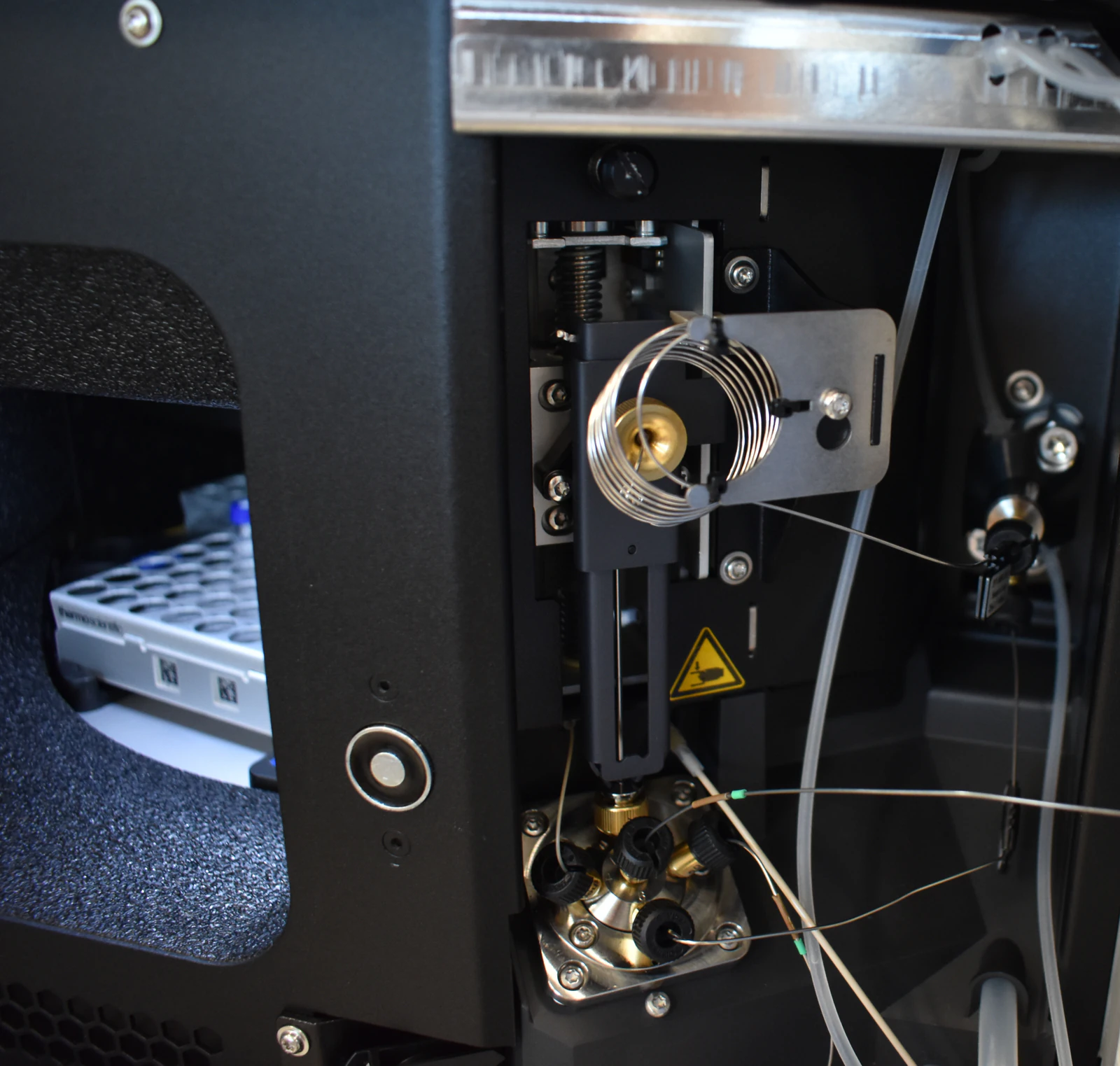
Manual vs Autosampler Injection Reproducibility in HPLC
A Practical Technical Guide for Quantitative Accuracy and Troubleshooting
Introduction
Injection reproducibility is a foundational requirement for reliable quantitative HPLC analysis. Differences between manual injections and autosampler injections frequently explain discrepancies in peak area precision, retention time stability, and carryover performance. While autosamplers are generally expected to outperform manual injection in repeatability, poor configuration, worn components, or solvent incompatibilities can negate this advantage.
This article provides a technically rigorous comparison of manual and autosampler injection reproducibility in HPLC, explains the mechanistic causes of variability, and outlines actionable troubleshooting and optimization strategies to restore consistent performance.
Performance Expectations for HPLC Injection Reproducibility
Typical Precision Benchmarks
Injection precision is commonly evaluated using relative standard deviation (%RSD) of peak area and retention time across replicate injections.
Peak Area Repeatability
Autosampler (properly maintained): ≤ 1.0–2.0% RSD
Manual injection: 2.0–5.0% RSD, strongly operator-dependent
Retention Time Repeatability
Autosampler: ≤ 0.1–0.3% RSD
Manual injection: ≤ 0.2–0.5% RSD
Carryover Acceptance
Blank after high standard: ≤ 0.1% of high-level response (method-dependent)
These values assume appropriate injection mode selection, matched sample diluent, stable temperature, and intact fluidic components.
Fundamental Differences Between Manual and Autosampler Injections
Manual Injection Characteristics
Operator-controlled syringe plunger speed
Mechanical valve actuation
Higher susceptibility to bubbles, pressure transients, and timing variability
Strong dependence on full-loop technique for reproducibility
Autosampler Injection Characteristics
Motor-driven syringe with programmable aspiration and dispense profiles
Automated valve switching with reproducible timing
Integrated needle washing and carryover control
Greater consistency when calibrated and maintained
Injection Modes and Their Impact on Reproducibility
Full-Loop Injection (Manual or Autosampler)
Sample loop is overfilled (typically 3–5× loop volume)
Highest volumetric accuracy and precision
Least sensitive to syringe metering errors
Recommended for validated quantitative methods
Partial-Loop Injection
Exact volume is metered into a larger loop
Sensitive to:
Syringe wear
Compressibility
Dead volume
Valve leakageHigher %RSD, especially at small volumes
µL Pickup / Needle-Only Injection
Sample volume is delivered directly via the needle
Minimal sample consumption
Most sensitive to:
Syringe condition
Bubble formation
Needle-seat integrityRequires strict calibration and monitoring
Common Symptoms and What They Indicate
High Peak Area %RSD
Air bubbles in syringe or loop
Partial-loop underfilling
Syringe seal wear or bypass leakage
Sample evaporation in vials
Aspiration speed too high for sample viscosity
Retention Time Instability
Pressure disturbances during injection
Rotor seal wear or internal valve leakage
Sample diluent stronger than initial mobile phase
Temperature fluctuation at column or autosampler
Carryover and Ghost Peaks
Inadequate needle or needle-seat washing
Adsorptive flow path materials
Highly retained or hydrophobic analytes
Insufficient wash solvent strength or volume
Intermittent Low-Area or Missing Peaks
Septum coring fragments
Particulate blockage in needle or loop
Inconsistent needle depth
Vial headspace or aspiration instability
Manual Injection: Best Practices for Maximum Reproducibility
Always Use Full-Loop Injection for Quantitation
Overfill loop by 3–5× loop volume
Example:
20 µL loop → inject 60–100 µLEnsures complete loop replacement and minimizes operator influence
Syringe Handling and Conditioning
Use high-quality glass syringes with tight-fitting plungers
Eliminate bubbles by repeated pre-fill and expel cycles
Rinse syringe and loop multiple times with sample before injection
Valve and Pressure Control
Switch injection valve smoothly to avoid pressure spikes
Avoid actuating valve during gradient changes
Inspect rotor seal and stator face for wear or scoring
Sample Diluent Compatibility
Match sample diluent to initial mobile phase within ±5–10% organic
Strong solvents cause band distortion and peak area variability
Autosampler Injection: Configuration and Optimization
Syringe Calibration and Motion Control
Verify volume accuracy across common injection volumes (1–10 µL)
Reduce aspiration and dispense speed for viscous samples
Enable compressibility compensation when available
Needle Seat Integrity
Inspect and replace needle seat O-rings regularly
Poor sealing causes air ingress and volume loss
Confirm needle alignment and penetration depth
Needle Wash Strategy
Use sufficient wash volume and cycles
Wash solvent must be strong enough to desorb analyte
Dual wash (weak + strong solvent) improves carryover control
Ensure wash lines are free of air and contamination
Autosampler Tray Conditions
Use cooling for volatile or degradable samples
Standardize vial fill height and headspace
Avoid aspirating near the air–liquid interface
Method and Chemistry Effects on Injection Precision
Solvent Strength Effects
Strong sample diluent disrupts focusing at column inlet
Causes peak splitting, fronting, and integration variability
Viscosity and Compressibility
High-viscosity matrices (e.g., DMSO-rich samples) require:
Slower aspiration
Longer stabilization times
Sometimes elevated tray temperature
Gradient Starting Conditions
Very weak initial mobile phases magnify injection effects
Short isocratic holds improve early-peak focusing
Analyte Adsorption
Use glass vials where possible
Avoid unnecessary polymeric contact surfaces
Consider inert additives when chemically compatible
Particulates
Filter samples and mobile phases (0.2–0.45 µm)
Prevents needle blockage and inconsistent aspiration
Quantitative Assessment and System Suitability
Repeatability Calculation
RSD (%) = 100 × (Standard Deviation / Mean)Typical Acceptance Criteria
Autosampler peak area %RSD: ≤ 1.0–2.0%
Manual injection peak area %RSD: ≤ 2.0–5.0%
Retention time %RSD: ≤ 0.1–0.5%
Carryover: ≤ 0.1% of high standard
Use a dedicated system suitability compound (e.g., caffeine, uracil) and inject ≥5 replicates at the target volume.
Targeted Diagnostic Experiments
Injection volume linearity test
Inject 1, 5, 10 µL → plot area vs volumeCarryover challenge
High standard → blank → low standardInjection mode comparison
Full-loop vs partial-loop under identical conditionsVial position test
Same vial across multiple tray locationsTime-in-tray study
Monitor evaporation and adsorption over hours
Corrective Action Summary
Manual Injection
Convert to full-loop injection
Standardize technique and timing
Replace worn rotor seals
Match sample diluent to mobile phase
Autosampler Injection
Use full-loop mode for quantitative work
Recalibrate syringe and slow aspiration if needed
Optimize needle wash and replace seat seals
Ensure proper tray cooling and vial sealing
Method-Level Adjustments
Reduce injection volume when solvent mismatch is unavoidable
Add short initial hold to improve focusing
Maintain rigorous filtration and temperature control
Ongoing Control and Documentation
Log injection parameters and consumable changes
Maintain scheduled replacement of syringes, seals, and valves
Trend peak area %RSD and carryover using control charts
Define alert limits that trigger maintenance before failure
Final Summary
Manual injections can achieve acceptable reproducibility when full-loop techniques and disciplined handling are used, but autosamplers provide superior consistency when properly configured and maintained. Injection variability most often originates from solvent strength mismatch, air or particulate ingress, worn mechanical components, or suboptimal aspiration and wash parameters. A structured diagnostic approach and preventive maintenance program are essential to maintain injection precision and quantitative reliability in HPLC.