Improper Column Storage and Permanent HPLC Performance Loss
Learn how to troubleshoot Improper Column Storage and Permanent HPLC Performance Loss: root causes, diagnostic checks, and fixes to improve reproducibility.
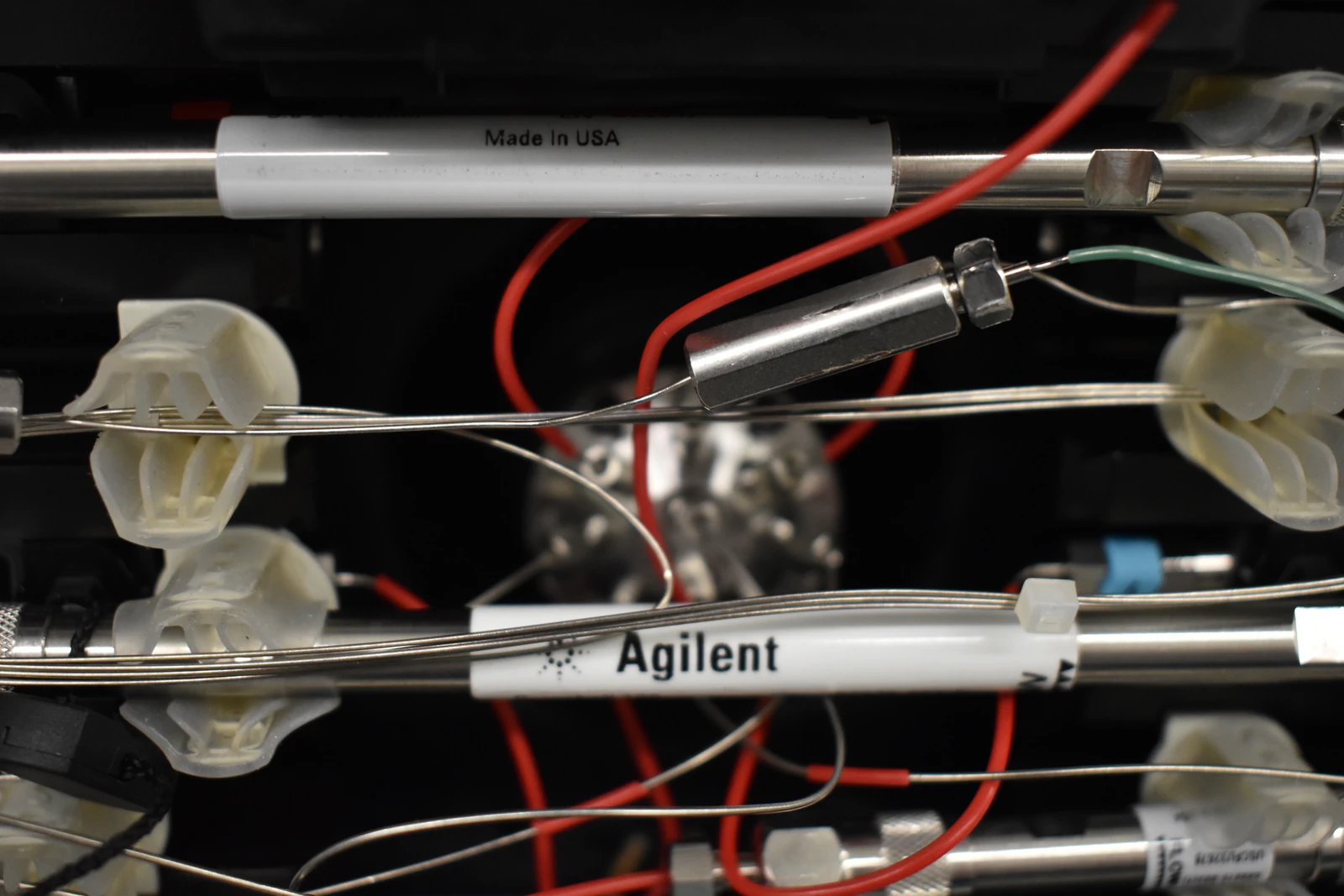
Prevent Irreversible Damage to Your HPLC Columns with Correct Storage Protocols
Executive Summary
Improper HPLC column storage is one of the most frequent and preventable causes of permanent chromatographic performance loss. Damage mechanisms include:
Stationary phase dewetting
Silica dissolution and bonded-phase hydrolysis
Salt precipitation and frit blockage
Microbial growth and biofilm formation
Freeze–thaw fracture of the packed bed
Gas ingress and void formation
Solvent incompatibility (polymer swelling/shrinkage)
Oxidative degradation from peroxide-containing solvents
These storage-related failures manifest as:
Increased backpressure
Reduced plate count (lower efficiency, N)
Retention-time drift or collapse
Peak tailing, fronting, or splitting
Baseline instability and ghost peaks
Because many of these mechanisms are irreversible, preventive storage protocols are essential for protecting column lifetime and chromatographic reproducibility.
How Improper HPLC Column Storage Causes Permanent Damage
Understanding the physical and chemical mechanisms behind column degradation is critical for prevention.
1. Stationary Phase Dewetting (Reversed-Phase Silica)
Prolonged storage in pure water can cause hydrophobic pore collapse in reversed-phase (RP) columns. Water is expelled from hydrophobic pores, preventing proper re-wetting.
Consequences:
Severe retention loss
Poor reproducibility
Incomplete recovery after organic solvent re-introduction
Dewetting is particularly problematic for C18 phases stored in 100% aqueous conditions.
2. Silica Dissolution and Bonded-Phase Loss
Extended exposure to:
High pH
Elevated temperature
Aggressive solvents
accelerates:
Silica backbone dissolution
Hydrolysis of bonded ligands
This increases exposed silanol activity, leading to:
Peak tailing
Selectivity drift
Permanent stationary phase loss
Once bonded phase is hydrolyzed, it cannot be restored.
3. Salt Precipitation and Crystallization
Storing a column in buffered mobile phase or capping a buffered column allows evaporation-driven crystallization in:
Frits
Pores
Inlet regions
Crystals cause:
Frit blockage
Channeling
High backpressure
Permanent bed damage
Never store columns in buffers or salt-containing solvents.
4. Microbial Growth and Biofilm Formation
Water and aqueous buffers at room temperature support microbial proliferation.
Effects include:
Biofilm formation on frits
Particulate shedding
Rising backpressure
Irreproducible retention
Ghost peaks from metabolites
Microbial fouling is often partially irreversible.
5. Freeze–Thaw Damage
Water expands upon freezing. If storage solvent freezes:
Packed bed fractures
Head voids form
Frits crack
Resulting chromatographic symptoms:
Peak fronting
Shoulders
Dramatic plate count loss
Freeze damage is irreversible.
6. Gas Ingress and Bubble Formation
Uncapped columns or permeable seals allow air entry.
This promotes:
Bed drying
Microvoid formation
Erratic flow distribution
Restarting at high flow traps bubbles and can permanently channel the bed.
7. Solvent Mismatch and Polymer Swelling
Polymer-based packings (e.g., PS-DVB) swell differently in various solvents.
Abrupt transitions or incompatible storage solvents can:
Alter pore structure
Change selectivity
Permanently modify performance
8. Oxidative or Peroxide Damage
Peroxide-containing solvents (notably aged ethers like THF) can:
Oxidize stationary phases
Degrade bonded chemistry
Always use fresh, stabilized solvents for storage.
9. Particle and Matrix Fouling
Residual:
Proteins
Lipids
Particulates
consolidate during storage and permanently foul frits.
Recognizing Storage-Related HPLC Column Performance Loss
Pressure Indicators
Persistent backpressure increase
Pressure spikes during startup
Efficiency Loss
Reduced theoretical plates (N)
Broader peaks
Increased tailing factor
Retention Changes
Loss of retention (RP dewetting)
Selectivity drift
Hysteresis during re-equilibration
Peak Shape Abnormalities
Fronting (head voids)
Shoulders or split peaks (channeling)
Baseline Artifacts
Ghost peaks
Instability from microbial or decomposed residues
Column-Type-Specific HPLC Storage Guidelines
Always follow manufacturer instructions. The following are widely applicable best practices.
Reversed-Phase (Silica-Based C18, C8, C4, Phenyl)
Short-term (days–weeks):
Store in approximately 50:50 acetonitrile:water (no buffer)
Long-term (weeks–months):
Store in 100% acetonitrile
Avoid:
Pure water storage
Buffers or salts in storage solvent
For highly hydrophobic phases:
Pre-wet with isopropanol before acetonitrile when reactivating after water exposure
Aqueous-Stable RP and Polar-Embedded Phases
Store in 50:50 to 80:20 acetonitrile:water
Long-term storage in 100% acetonitrile
HILIC Columns (Silica-Based Zwitterion, Amide, Diol)
Store in 70–90% acetonitrile
Maintain high organic content
Avoid pure water storage
Normal-Phase Silica
Store in hexane:isopropanol (90:10 to 70:30)
Exclude moisture
Avoid water contamination
Ion-Exchange (IEX) Columns
Do not store in pure organic solvent
Store in low ionic strength aqueous solution
Include antimicrobial (e.g., 10–20% ethanol if compatible)
Flush salts before transitioning to organic solvents
Size-Exclusion (SEC)
Aqueous SEC:
Store in mobile phase with antimicrobial
Avoid crystallizable buffers
Organic GPC:
Store in validated mobile phase (e.g., stabilized THF)
Prevent moisture ingress
Polymer-Based Packings (PS-DVB)
Store only in vendor-recommended solvent
Use gradual solvent transitions during shutdown and startup
Robust HPLC Column Shutdown and Storage Procedure
Replace buffered mobile phase with salt-free solvent
Flush 10–20 column volumes (CV) with compatible solvent
Transition gradually to storage solvent
Cap both ends tightly
Store upright, dark, stable room temperature
Avoid freezing
Label column with:
Storage solvent
Date
Last method used
Column Volume (CV) Estimation
Column volume can be estimated as:
CV (mL) ≈ π × (ID/2)² × L × ε × 10
Where:
ID = internal diameter in cm
L = length in cm
ε = total porosity
Example:
For a 150 × 4.6 mm column with ε ≈ 0.6:
CV ≈ 1.5 mL
Flush 15–30 mL to achieve 10–20 CV.
Startup After Storage
Use degassed solvents
Prime and purge system
Start at low flow (e.g., 0.2 mL/min for 4.6 mm column)
Gradually ramp to method flow
Equilibrate with 10–20 CV
Monitor pressure and baseline
Use guard column or in-line filter
Recovery Actions for Storage Mistakes
RP Column Stored in Water (Dewetting)
Flush 5–10 CV isopropanol (low flow)
Flush 10–20 CV acetonitrile
Re-equilibrate
If retention does not recover → likely permanent change.
Salt Precipitation
Slowly flush with water (low flow)
Transition to storage solvent
Persistent high pressure suggests irreversible frit fouling.
Microbial Contamination
Flush with 20% ethanol (if compatible)
Transition to storage solvent
Prevent recurrence by avoiding water-only storage.
Gas Ingress / Void Formation
Degas thoroughly
Backflush if permitted
Ramp flow slowly
Visible voids are not recoverable.
Practical Controls to Prevent Permanent HPLC Column Damage
Standardize shutdown SOPs
Never store in buffers or salts
Maintain solvent log history
Replace guard columns proactively
Audit solvent age and peroxide formation
Avoid high-temperature storage
Prevent freezing
Conclusion: Protecting HPLC Column Lifetime and Performance
Improper HPLC column storage leads to irreversible chromatographic degradation through:
Dewetting
Silica dissolution
Ligand hydrolysis
Salt precipitation
Microbial fouling
Freeze damage
Gas-induced voids
Solvent incompatibility
Strict adherence to chemistry-specific storage solvents, salt-free flushing, controlled solvent transitions, and proper sealing significantly extends column life and preserves analytical reliability.
Severe storage damage is often permanent. Prevention is the only guaranteed protection.